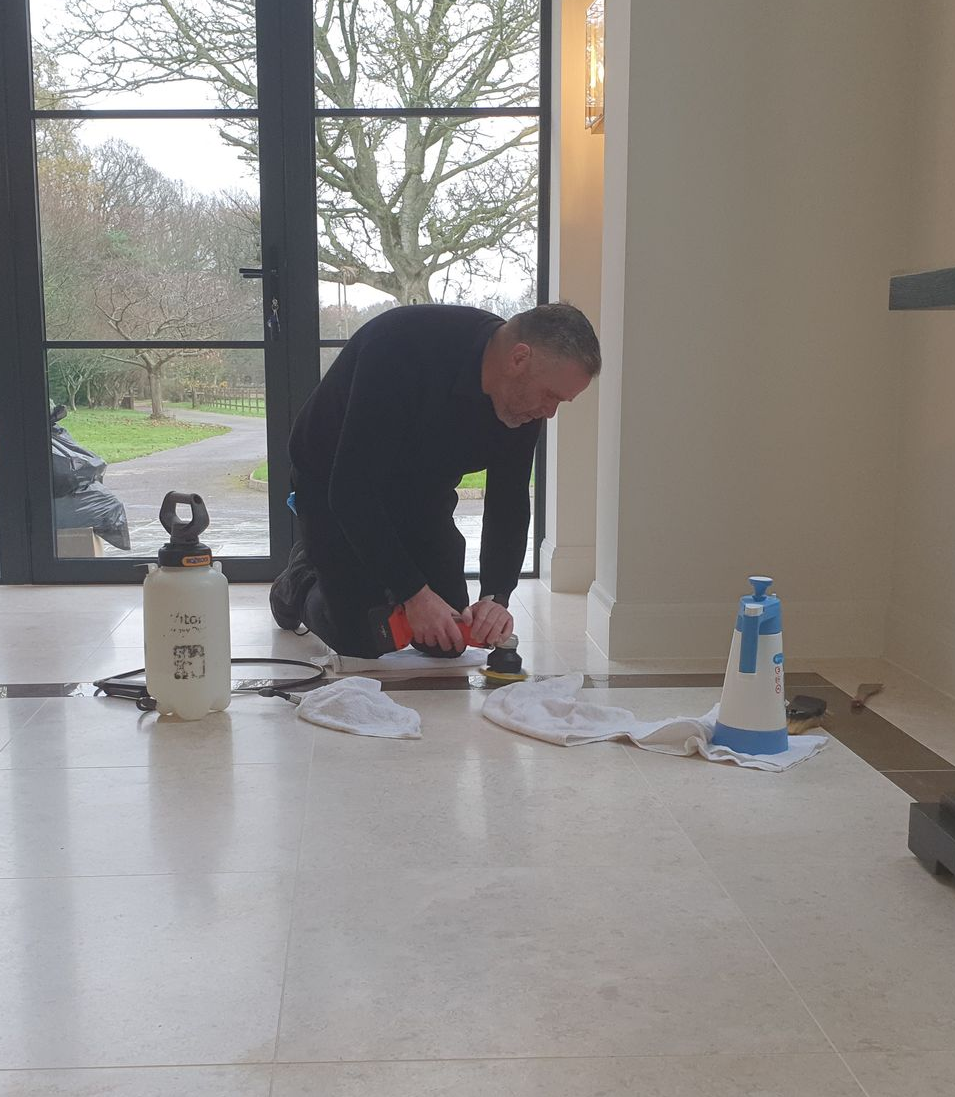
Travertine , the ultimate care
This page is dedicated to Travertine itself including how we clean & restore, what we do not do.
From Earth to Your Home: The Technical Journey of Travertine Floors
Travertine has been admired for thousands of years and features in iconic structures such as Roman temples, bathhouses, and amphitheatres. Today, it remains a popular choice across Hampshire for kitchens, hallways, bathrooms, and open-plan living spaces — valued for its warmth, variation, and timeless character. But its journey from natural formation to a finished floor is long, detailed, and highly specialised. Here’s a deeper, more technical look at how travertine is created, processed, and ultimately installed in your home.
Formed by Mineral Springs and Geological Processes
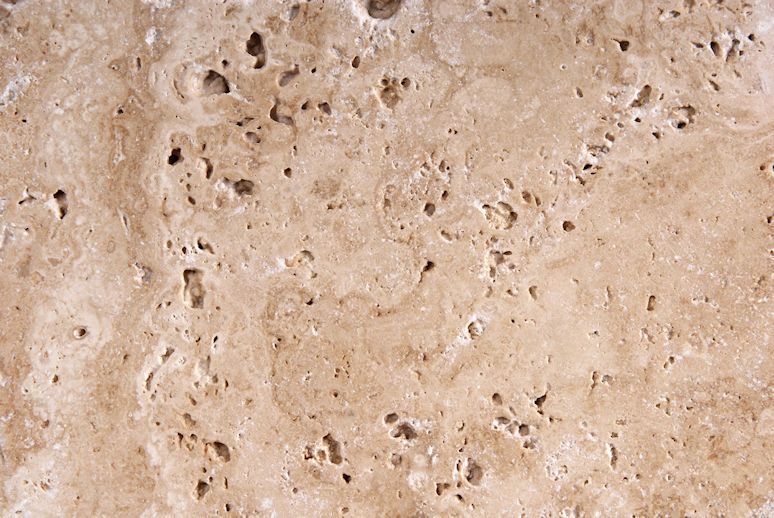
Travertine is a sedimentary limestone formed primarily through precipitation of calcium carbonate (CaCO₃) from mineral-rich waters. This often occurs near hot springs, geothermal vents, or limestone caves where:
- Water saturated with dissolved calcium and bicarbonate ions rises to the surface.
- A drop in pressure and temperature causes CO₂ degassing, triggering calcite to precipitate.
- Layer upon layer builds up, forming travertine with its characteristic voids, pores, and linear banding.
The stone often contains:
- Vugs — larger cavities.
- Capillary pores — fine channels within the stone.
- Organic inclusions — plant fragments or mineral impurities, giving colour variation.
These natural voids are what give travertine its unique character — and also why professional filling, sealing, and maintenance are essential.
Quarrying Travertine
Large deposits are found in Italy (notably Tivoli), Turkey, Iran, and Mexico. The quarrying process involves:
- Diamond wire saws cutting vertical and horizontal channels around massive stone blocks.
- Hydraulic splitters or controlled wedges used to free the block.
- Extraction of blocks typically weighing several tonnes.
- Immediate grading based on:
- Colour consistency
- Veining patterns
- Density and pore structure
- Suitability for filled or unfilled finishes
High-grade blocks become premium tiles; lower grades may be used for architectural features or split-face panels.
Cutting, Filling & Factory Finishing
Once at the processing plant, travertine undergoes a series of precision steps:
1. Block Slicing
- Large multi-blade or diamond belt saws cut blocks into slabs of consistent thickness (usually 10–20 mm for floor tiles).
- Slabs are dried to prepare for filling.
2. Filling Cavities
To create a smooth, structurally stable surface, many travertine tiles are filled using:
- Polyester resin
- Epoxy resin
- Cementitious fillers (more traditional but less durable)
Resin filling is cured under UV or heat lamps to harden and bond within the stone’s pores.
3. Finishing Options
- Honed & Filled
Mechanically abraded using diamond abrasives to create a smooth, matte surface, with all voids filled. - Honed & Unfilled
Same process, but cavities left open for a more rustic, natural appearance. - Polished
Further refinement through progressively finer diamond grits, ending with polishing powders to achieve a reflective, glossy finish. - Tumbled
Placed in mechanical drums with abrasives to soften edges and simulate aged stone. - Brushed / Antiqued
Wire brushes lightly remove softer minerals, giving a textured, slip-resistant finish.
Each finish affects both aesthetic and maintenance requirements.
Tile Production, Selection & Installation
Slabs are cut into tiles — standard formats (e.g., 406×406 mm, 600×400 mm) or bespoke sizes for luxury installations.
During installation:
- Subfloor preparation is critical. Any deflection can result in tile cracking.
- Flexible adhesives and polymer-modified grouts are recommended to absorb movement.
- For unfilled or tumbled travertine, installers may apply grout-filled finishing, pressing grout into open voids.
- A penetrating or impregnating sealer is normally applied immediately after installation to protect against:
- Oil absorption
- Water ingress
- Etching
- Staining from household products
In wet areas, additional waterproofing systems and epoxy grouts may be used.
Care, Maintenance & Longevity
Travertine is durable but naturally porous and reactive to acids. Proper care is essential:
Daily / Weekly Care
- Clean with pH-neutral stone-safe solutions.
- Avoid acidic products (vinegar, limescale removers) to prevent etching.
Periodic Professional Maintenance
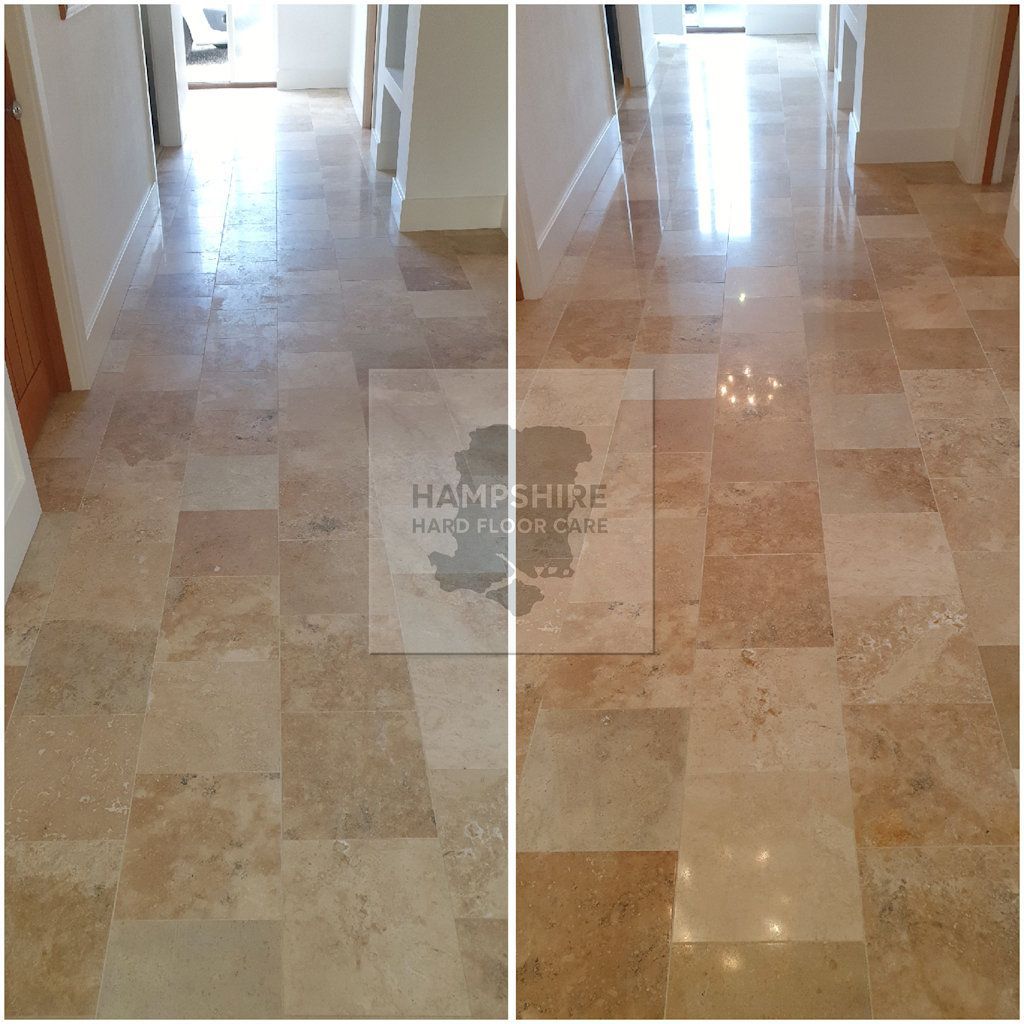
Over time, foot traffic can dull the surface or expose voids as filler wears. Professional services restore the finish:
- Deep mechanical cleaning using oscillating or rotary machines.
- Honing with diamond abrasives to remove surface wear, scratches, or mild etching.
- Crack and hole repair using high-strength resin fillers colour-matched to the stone.
- Impregnating and surface sealing to enhance protection and reduce porosity.
For polished floors, repolishing and powder-polishing may be used to restore reflection.
Keeping Travertine Beautiful in Hampshire Homes
At Hampshire Hard Floor Care, we specialise in the restoration and long-term care of travertine floors across Hampshire. Using professional diamond-abrasive systems, deep extraction cleaning, and high-performance impregnating sealers, we revive:
- Dull traffic lanes
- Etched areas
- Open cavities
- Cracks and chips
- Stained or uneven surfaces
Whether your travertine is honed, polished, filled, unfilled, or tumbled, our methods enhance its natural beauty and ensure it remains a warm, elegant feature in your home for decades to come.
Trusted Experts in Stone Floor Care in Hampshire
At Hampshire Hard Floor Care, we use a safe and proven process to clean and restore your Travertine floors — removing years of built-up soil, residues, and dullness while protecting the natural beauty of the stone.
1. Initial Inspection & Testing
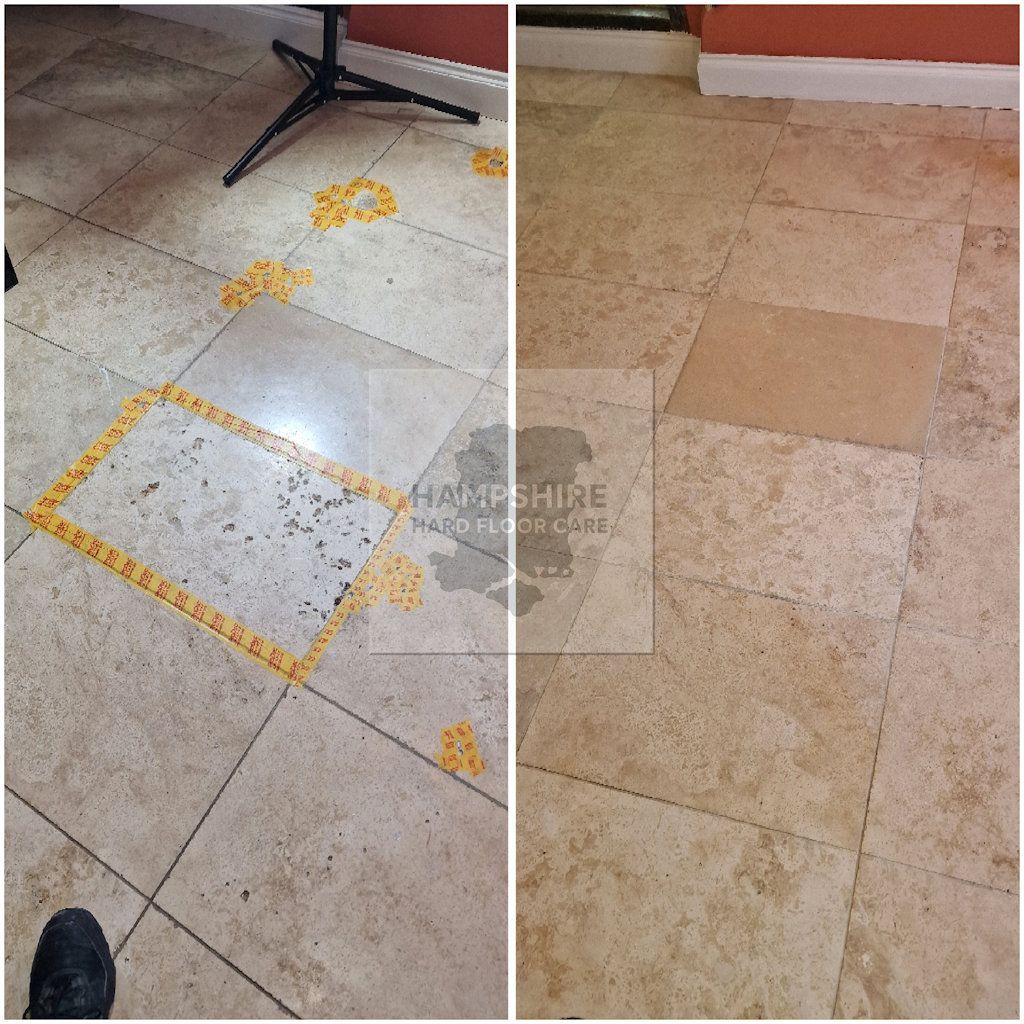
We begin by inspecting the floor to identify the type of Travertine , finish, level of wear, and any existing sealers or coatings.
A small test area is often completed to determine the safest and most effective cleaning approach.
2. Dry Soil Removal
All surfaces are vacuumed and dry-mopped to remove loose grit, dust, and debris which can scratch the stone during wet cleaning.
3. Pre-Treatment
A pH-neutral or slightly alkaline Travertine -safe cleaner (never acidic) is applied and allowed to dwell, loosening embedded dirt, old cleaning residues, and surface contamination.
4. Agitation
The solution is mechanically agitated using
rotary or oscillating floor machines fitted with soft brushes or diamond-impregnated pads appropriate for Travertine.
This deep-cleans pores and grout lines without damaging the surface.
5. Rinsing & Extraction
Contaminants and slurry are rinsed away using controlled water and vacuum extraction.
We use professional stone rinsing systems to ensure the surface is left clean, residue-free, and ready for drying.
6. Spot Treatment (If Required)
Any remaining marks or minor etching are carefully treated using specialist Travertine restoration techniques or mild honing pads to blend the area.
7. Drying
Floors are thoroughly dried using air movers to ensure all moisture is removed prior to sealing.
8. Sealing & Protection
Once fully dry, a professional-grade
penetrating sealer or
surface finish (satin or natural matt) is applied to protect the stone from spills, staining, and moisture.
We only use trusted brands such as
Faber Stone Care, Fila,
TileMaster, StoneCare Direct and
LTP, ensuring long-lasting protection.
9. Final Inspection & Advice
The restored surface is inspected under good lighting, and we provide aftercare guidance — including recommended cleaning products and maintenance routines to keep your Travertine looking beautiful for years.
Why We Avoid Using High-Pressure Systems on Stone Floors
At Hampshire Hard Floor Care, we often get asked why we don’t use high-pressure rotary tools such as the HydraMaster SX-15 for cleaning natural stone floors. While the SX-15 is an excellent system for external hard surfaces and ceramic or porcelain tile, it is not suitable for delicate or polished natural stone.
How the SX-15 Works
The SX-15 works by spraying water at pressures of up to 2,500 psi and recovering it through a vacuum system. This high energy action can quickly remove heavy soil from textured tiles and grout, so whilst this method may be quicker it also introduces several risks when used on natural stone.
Risks to Natural Stone
· Surface Damage – The powerful jets can erode or scratch soft stones like limestone, travertine, and marble, dulling their polished finish or leaving visible swirl marks.
· Grout Blow-Out – Older or porous grout joints can be loosened or completely blown out under pressure.
· Water Ingress – High pressure can drive water deep into the stone or subfloor, leading to efflorescence, dark patches, or long-term moisture problems.
· Uneven Cleaning – The spinning jets can leave circular patterns on polished or honed finishes if moved too fast.
Our Preferred Method
We use low-moisture rotary or planetary machines with controlled cleaning chemistry designed for stone. This method gently loosens soiling while maintaining full control over pressure, temperature, and moisture levels. It ensures:
- No risk of etching or erosion.
- Even, consistent results.
- Faster drying times.
- Complete safety for surrounding finishes and furnishings.
Our approach aligns with the National Carpet Cleaners Association (NCCA) who represent professional cleaning and restoration technicians across multiple surfaces including internal stone floors and IICRC recommendations for stone care, as well as manufacturer & supplier guidelines from companies such as Marshalls and Building Transformation who advise against using high-pressure systems on interior natural stone.
In summary: High-pressure tools like the SX-15 are superb for commercial situations, but they are too aggressive for interior natural stone restoration. Our specialist stone cleaning systems achieve deep cleaning safely — without risking permanent damage.
Restore Your Stone Floors to Perfection
Don’t settle for dull, stained stone—let Hampshire Hard Floor Care bring back the wow factor to your home or business. Contact Richard and Michelle today for a free consultation.
Call Richard for free quotation
Hampshire Hard Floor Care
Based in Hampshire also serving surrounding areas
Phone
01489600571 / 07773655075