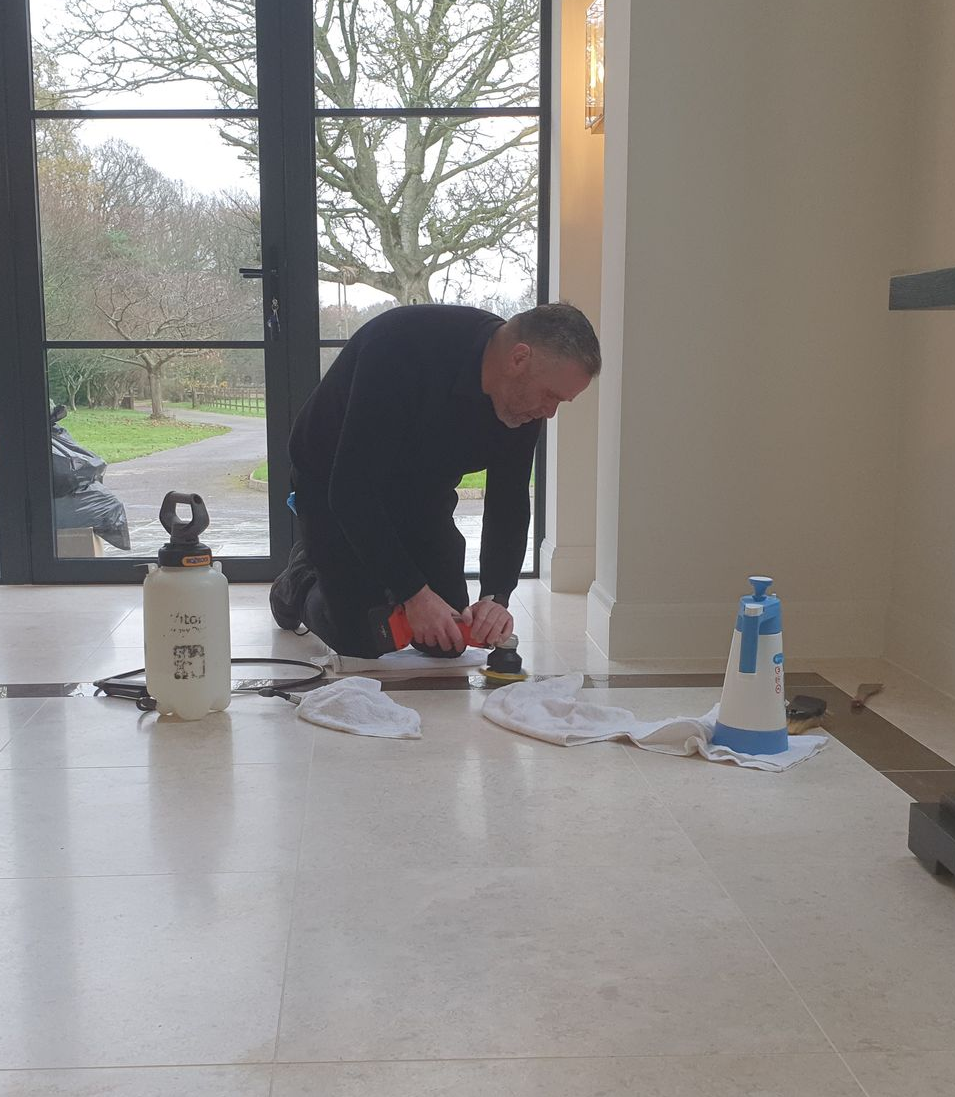
Marble floors , the ultimate care
This page is dedicated to Marble itself including how we clean & restore, what we do not do.
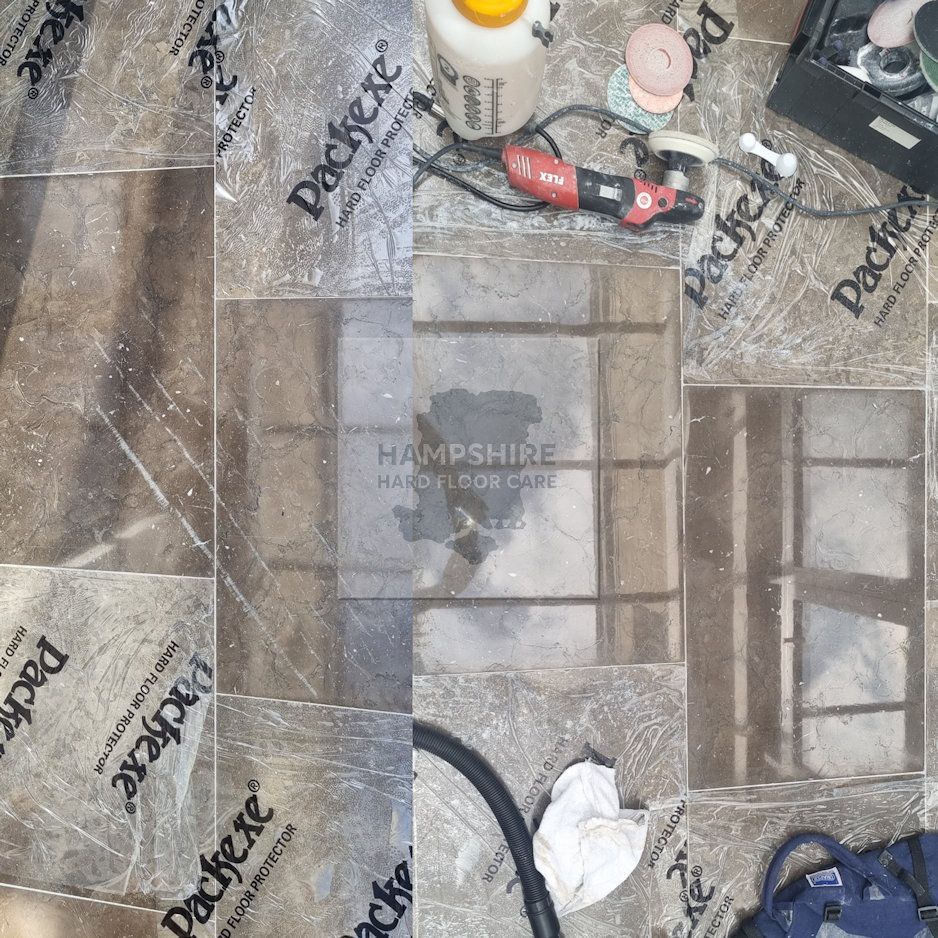
From Earth to Your Home: The Journey of Marble Floors
Marble has been admired for thousands of years, chosen for palaces, temples, sculptures, and grand architectural interiors across the world. Its luxurious sheen, intricate veining, and timeless elegance make it one of the most prestigious flooring materials installed in modern homes throughout Hampshire.
But before Marble becomes the smooth, reflective surface we walk on, it undergoes an extraordinary geological and manufacturing journey. Here’s a detailed, technical look at how Marble forms, is quarried, processed, and finally installed in your home.
Formed Through Metamorphism Over Millions of Years
Unlike Travertine or Limestone, Marble is a metamorphic stone—formed when existing limestone is subjected to immense heat, pressure, and geological forces deep within the Earth’s crust.
This process causes:
- Recrystallisation of calcite
- Compression of mineral grains
- Formation of interlocking crystal structures
- Development of natural veining through impurities like graphite, iron oxides, clay, and serpentine
These geological transformations produce the classic features Marble is known for:
- High clarity and reflectivity
- Smooth, dense surface
- Crystalline sparkle
- Unique veining (straight, clouded, or dramatic)
- Sensitivity to acids and scratches due to its calcite base
Each piece of Marble contains millions of years of geological history frozen into its structure.
Quarrying Marble
The world’s most renowned Marble quarries are found in:
- Italy (Carrara, Calacatta, Statuario)
- Turkey
- Greece
- Spain
- India
Quarrying is a precise and highly skilled process:
- Mapping and removing overburden to expose the Marble bed.
- Cutting large bench walls using diamond wire saws, chain saws, or diamond belt cutters.
- Separating blocks using hydraulic wedges or controlled splitting.
- Extracting enormous blocks weighing 10–30 tonnes.
- Grading each block based on:
- Veining consistency
- Colour purity
- Density
- Crystal structure
- Absence of fissures
Premium-grade blocks are reserved for tiles, slabs, and luxury finishes.
Block Processing, Cutting & Finishing
After quarrying, the blocks are transported to factories where they undergo several technical processes:
1. Block Slicing
Large diamond gang saws or multi-blade saws slice blocks into
uniform slabs—typically 18–30 mm thick.
These slabs are then resin-treated if needed to reinforce natural fissures.
2. Surface Resin Treatment (Optional)
Many marbles, especially heavily veined varieties, are strengthened using:
- Epoxy resins
- Polyester resins
This process:
- Stabilises the stone
- Fills microfissures
- Improves surface flatness and longevity
The resin is cured under heat or UV before finishing.
3. Finishing Options
Marble can be finished in several ways depending on its use:
- Honed – matte, smooth, low-sheen
- Polished – high-gloss, mirror-like reflection
- Brushed / Antiqued – textured, with softened edges
- Tumbled – aged, rounded appearance
- Leathered – textured but refined, often used for worktops
Polishing uses progressively finer diamond abrasives (up to 3000 grit+) followed by polishing powders to create a reflective, crystalline surface.
Tile Production, Selection & Installation
Once the slabs are finished:
- They are cut into tiles of standard or bespoke sizes
- Edges may be bevelled or straight-cut depending on the desired aesthetic
Installation Requirements
Because Marble is sensitive and high-value, installation must be exact:
- Subfloors must be flat and stable
- Full-bed flexible adhesives are required
- Joints must be filled with polymer-modified grouts
- Movement joints must be respected
- Floors must be cleaned and sealed after installation
A penetrating impregnating sealer is typically applied to protect against:
- Staining
- Moisture ingress
- Oil absorption
In bathrooms, wet rooms, or kitchens, sealing is absolutely essential.
Care, Maintenance & Long-Term Longevity
Marble is durable but requires the correct maintenance to keep it at its best:
Daily / Weekly Care
- Clean with pH-neutral, marble-safe products
- Avoid acidic cleaners (vinegar, lemon, limescale removers)
- Use soft pads, not abrasive tools
Professional Periodic Maintenance
Over time, Marble can become:
- Dull
- Scratched
- Etched by acids
- Marked by traffic lanes
- Worn in high-use areas
Professional restoration involves:
- Deep mechanical cleaning
- Diamond honing to remove scratches, etching, and dullness
- Polishing to restore clarity or high-gloss reflectivity
- Optional resin repair of chips or holes
- Resealing to maintain protection
This process can return even heavily worn Marble to a “like new” appearance.
Restoring Marble Floors in Hampshire
At Hampshire Hard Floor Care, Richard and Michelle specialise in the cleaning, honing, polishing, and long-term care of Marble floors across Hampshire. Using advanced diamond-abrasive systems, resin repair methods, deep-cleaning techniques, and high-performance impregnating sealers, they restore:
- Scratches and wear patterns
- Etched, dull, or cloudy surfaces
- Deep staining
- Missing or worn shine
- Old repairs needing correction
- Cracks, chips, and natural fissures
Whether your Marble is honed, polished, veined, resin-treated, or part of a modern or heritage installation, our methods enhance its natural beauty, clarity, and luxurious appeal for many years to come.
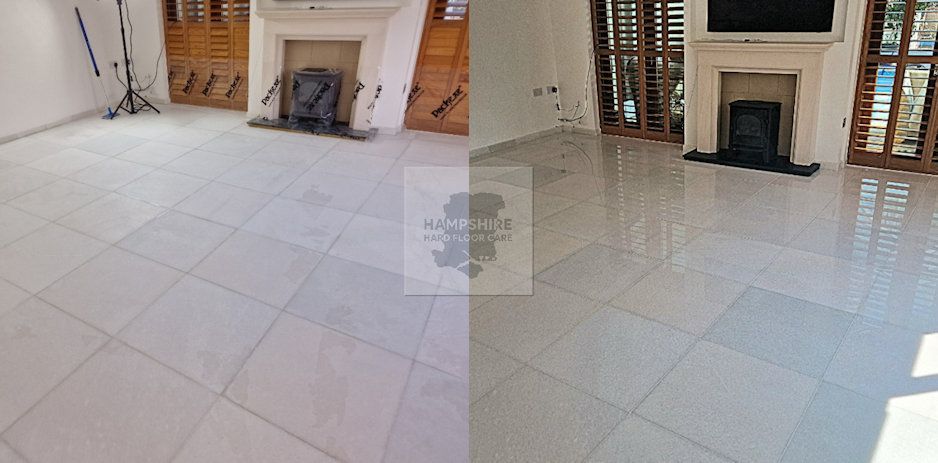
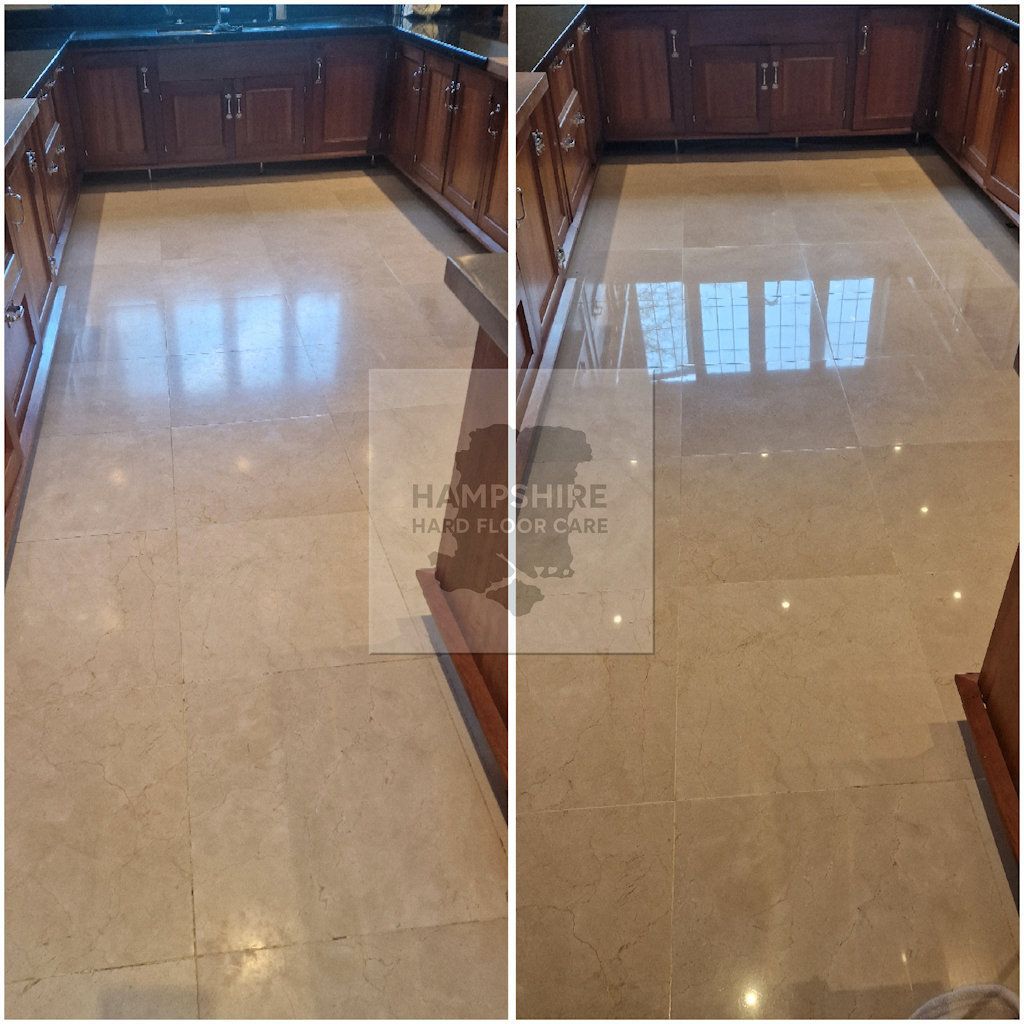
Trusted Experts in Stone Floor Care in Hampshire
At Hampshire Hard Floor Care, we use a safe and proven process to clean, hone, and polish your Marble floors — removing years of dullness, soil, etching, and surface wear while protecting the natural clarity and beauty of the stone.
1. Initial Inspection & Testing
We begin by inspecting the floor to identify the type of Marble, its finish (honed or polished), level of wear, and any existing sealers or coatings.
A small test area is often completed to determine the safest and most effective cleaning and restoration approach.
2. Dry Soil Removal
All surfaces are vacuumed and dry-mopped to remove loose grit, dust, and debris, which can cause scratching during wet cleaning.
3. Pre-Treatment
A pH-neutral or slightly alkaline marble-safe cleaner (never acidic) is applied and allowed to dwell. This loosens ingrained dirt, old residues, and surface contamination without reacting with the calcium in the stone.
4. Agitation
The solution is mechanically agitated using low-speed rotary or planetary machines fitted with non-abrasive brushes or marble-safe pads.
This deep-cleans the pores and surface texture without dulling or scratching the stone.
5. Rinsing & Extraction
Contaminants and slurry are rinsed away using controlled water and vacuum extraction.
We use professional stone-rinsing systems to ensure the surface is left clean, residue-free, and ready for restoration.
6. Spot Treatment (If Required)
Any remaining marks — such as etching, small scratches, or spot staining — are treated using specialist Marble restoration techniques.
This may include poultices for stains or light honing pads for localised etching.
7. Diamond Honing (If Required)
For worn or scratched Marble, we use diamond abrasives to remove surface damage and refine the stone.
We start with coarser grits (as needed) to remove dullness, etching, and traffic wear, then gradually move through finer grades to close the pores and prepare the stone for polishing.
Each stage is thoroughly cleaned between grits to prevent contamination and to ensure an even, consistent finish.
8. Marble Polishing (Optional / As Requested)
If a high-sheen or reflective finish is desired, the stone is polished using progressively finer diamonds followed by marble polishing powders.
This process rebuilds the natural clarity and depth within the stone, creating a luxurious, mirror-like shine without coatings or emulsions.
We can achieve your preferred finish — from soft satin to high gloss — depending on the stone’s characteristics and your style preference.
9. Drying
Floors are fully dried using air movers to ensure all moisture is removed before sealing.
10. Sealing & Protection
Once dry, a premium-grade penetrating impregnating sealer is applied to protect the stone from oils, water, etching, and staining.
We only use trusted brands such as
Faber Stone Care, Fila, TileMaster, StoneCare Direct, and LTP, ensuring long-lasting, high-performance protection.
Why We Avoid Using High-Pressure Systems on Stone Floors
At Hampshire Hard Floor Care, we often get asked why we don’t use high-pressure rotary tools such as the HydraMaster SX-15 for cleaning natural stone floors. While the SX-15 is an excellent system for external hard surfaces and ceramic or porcelain tile, it is not suitable for delicate or polished natural stone.
How the SX-15 Works
The SX-15 works by spraying water at pressures of up to 2,500 psi and recovering it through a vacuum system. This high energy action can quickly remove heavy soil from textured tiles and grout, so whilst this method may be quicker it also introduces several risks when used on natural stone.
Risks to Natural Stone
· Surface Damage – The powerful jets can erode or scratch soft stones like limestone, travertine, and marble, dulling their polished finish or leaving visible swirl marks.
· Grout Blow-Out – Older or porous grout joints can be loosened or completely blown out under pressure.
· Water Ingress – High pressure can drive water deep into the stone or subfloor, leading to efflorescence, dark patches, or long-term moisture problems.
· Uneven Cleaning – The spinning jets can leave circular patterns on polished or honed finishes if moved too fast.
Our Preferred Method
We use low-moisture rotary or planetary machines with controlled cleaning chemistry designed for stone. This method gently loosens soiling while maintaining full control over pressure, temperature, and moisture levels. It ensures:
- No risk of etching or erosion.
- Even, consistent results.
- Faster drying times.
- Complete safety for surrounding finishes and furnishings.
Our approach aligns with the National Carpet Cleaners Association (NCCA) who represent
professional cleaning and restoration technicians
across multiple surfaces including internal stone floors and IICRC recommendations for stone care, as well as manufacturer & supplier guidelines from companies such as
Marshalls and
Building Transformation who advise against using high-pressure systems on interior natural stone.
In summary: High-pressure tools like the SX-15 are superb for commercial situations, but they are too aggressive for interior natural stone restoration. Our specialist stone cleaning systems achieve deep cleaning safely — without risking permanent damage.
Restore Your Stone Floors to Perfection
Don’t settle for dull, stained stone—let Hampshire Hard Floor Care bring back the wow factor to your home or business. Contact Richard and Michelle today for a free consultation.
Call Richard for free quotation
Hampshire Hard Floor Care
Based in Hampshire also serving surrounding areas
Phone
01489600571 / 07773655075