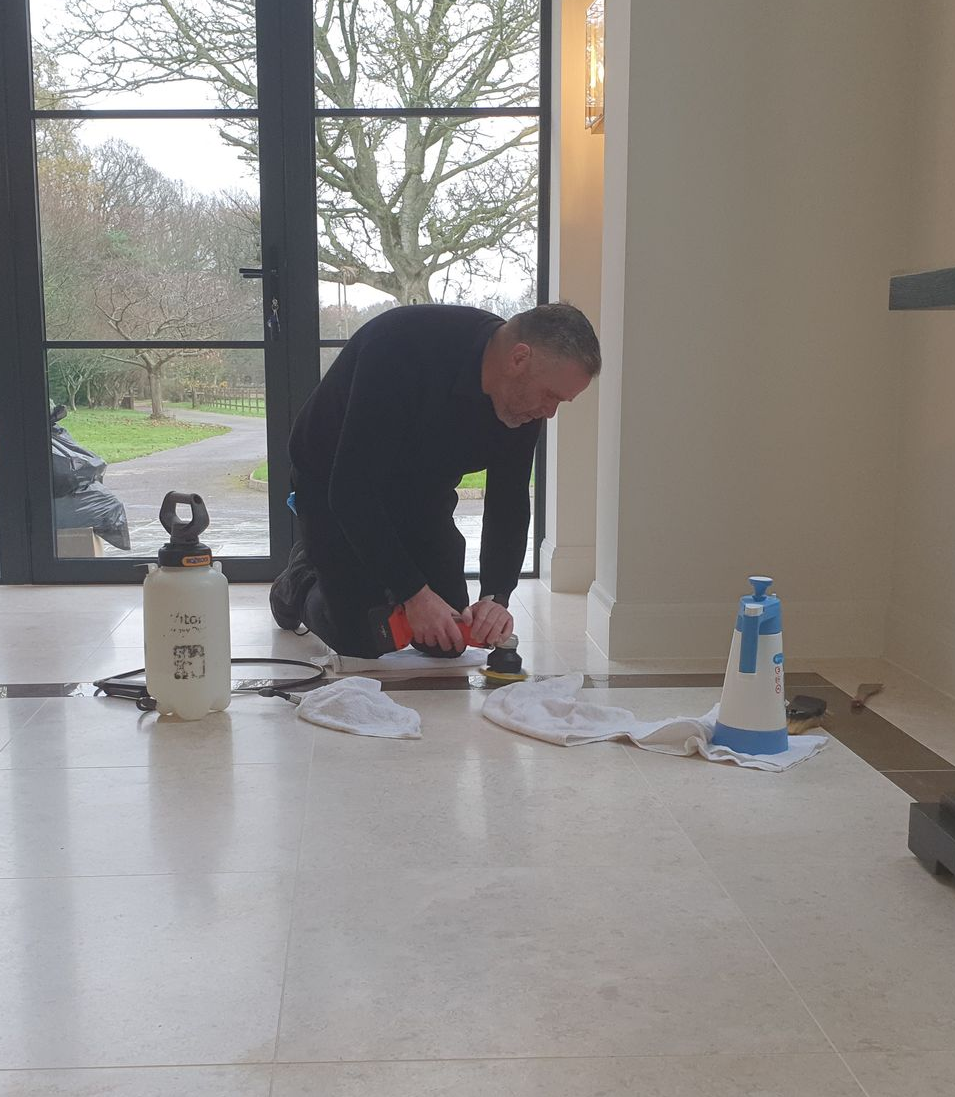
Sandstone & Yorkstone, the ultimate care
This page is dedicated to Sandstone & Yorkstone itself including how we clean & restore, what we do not do.
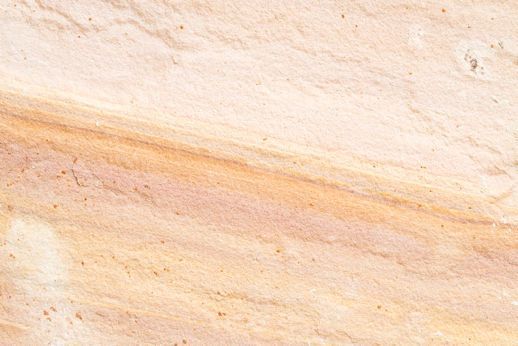
From Earth to Your Home: The Journey of Sandstone & Yorkstone Floors
Sandstone and Yorkstone have been used for centuries in cottages, manor houses, historic estates, courtyards, and modern homes across Hampshire. Known for their durability, natural texture, and timeless British character, these stones follow a detailed geological and processing journey before becoming the floors found in today’s kitchens, hallways, boot rooms, and living spaces.
This is a deeper technical look at how Sandstone and Yorkstone are formed, quarried, processed, finished, and installed in your home.
Formed Over Millions of Years Through Sedimentation
Both Sandstone and Yorkstone originate as sedimentary stones formed through the compaction of natural minerals, clays, and quartz particles. This process takes place over millions of years in riverbeds, ancient deltas, and coastal environments. Key characteristics include:
Sandstone
- Composed mainly of quartz grains bonded with silica, calcite, or iron oxides.
- Colour variations depend on mineral content — creams, buffs, browns, greys, and iron-rich reds.
- The stone naturally contains layers, capillary pores, micro-pits, and cleft textures.
Yorkstone
Yorkstone is a specific type of high-quality Sandstone quarried primarily in Yorkshire. It is known for:
- Dense, tightly packed quartz grains.
- Natural bedding planes that give the stone its strength.
- Subtle tonal variation: grey, buff, olive, or blueish hues.
- Excellent weathering properties, making it ideal for indoor and outdoor use.
The layered nature of these stones gives them their distinctive look — and also means correct cleaning, sealing, and maintenance are essential.
Quarrying Sandstone & Yorkstone
Stone is extracted from open-pit quarries using precise modern machinery:
- Diamond wire saws cut vertical and horizontal channels around stone blocks.
- Hydraulic splitters free the blocks from the bedrock along natural seams.
- Blocks are lifted using cranes or heavy plant equipment.
- Each block is graded according to:
- Density
- Colour consistency
- Bedding integrity
- Surface texture
- Suitability for flags, tiles, or architectural stonework
High-grade Yorkstone, in particular, is prized for its uniform density and durability.
Cutting, Calibration & Factory Finishing
Once transported to processing plants, the stone undergoes several technical steps:
1. Block Slicing
Large blocks are cut into slabs using multi-blade or diamond belt saws. For flooring, slabs are typically calibrated to 18–22 mm thickness for internal stone.
2. Surface Dressing
Sandstone and Yorkstone can be finished in multiple ways depending on the desired look and slip resistance.
Common finishes include:
- Riven (Split)
Created by splitting the stone along its natural bedding plane. Leaves a rugged, traditional, naturally textured finish. - Honed
Surface is mechanically abraded with diamond abrasives to create a smooth, matte finish with softened clefts. - Brushed / Antiqued
Wire brushes remove softer mineral particles for a worn, characterful texture. - Sawn
Straight from the saw — flat, slightly textured surface with sharp edges. - Tumbled
Stones are placed in abrasive drums to round edges and create an aged, heritage appearance.
Unlike Travertine, Sandstone and Yorkstone are not resin-filled, as their structure is layered rather than cavity-based.
Tile Production, Selection & Installation
Tiles are cut from large slabs into standard or custom sizes. During installation:
Subfloor Preparation
A stable subfloor is essential. Uneven subfloors can lead to:
- Rocking tiles
- Cracks
- Lippage
- Grout failure
Adhesives & Grouts
Because Sandstone and Yorkstone can vary in porosity:
- Flexible, full-bed solid adhesives are recommended.
- Polymer-modified grouts help resist moisture absorption.
- Wet areas may require waterproofing membranes.
Sealing Immediately After Installation
Due to natural porosity, the stone is sealed soon after installation using a high-quality impregnating sealer to protect against:
- Water absorption
- Oil staining
- Dirt retention
- Dark patches from moisture
Care, Maintenance & Long-Term Longevity
Daily / Weekly Care
To maintain texture and clarity:
- Vacuum or dry dust-mop regularly to remove abrasive grit.
- Damp mop with pH-neutral stone-safe cleaners.
- Avoid acidic, bleach-based, or harsh alkaline products.
Periodic Professional Maintenance
Over time, foot traffic can cause:
- Dullness
- Embedded soiling
- Surface wear
- Loss of colour clarity
- Opening of the natural grain
Professional care includes:
- Deep mechanical cleaning with rotary or oscillating machines.
- Controlled diamond honing (not polishing) to flatten raised grain, remove surface wear, and restore uniformity.
- Resin repairs for chips or structural imperfections if needed.
- Application of penetrating impregnating sealers to reduce future soiling and staining.
Keeping Sandstone & Yorkstone Beautiful in Hampshire Homes
At Hampshire Hard Floor Care, Richard and Michelle specialise in restoring and maintaining Sandstone and Yorkstone floors across the region. Their expertise includes:
- Deep extraction cleaning
- Diamond honing for a smooth, even, low-sheen finish
- Removal of deep-ingrained soil
- Stain removal using specialist poultices
- Re-sealing with high-performance impregnators
- Restoration of riven, honed, tumbled, and brushed finishes
Whether your stone is modern sawn Yorkstone, traditional riven Sandstone, or a heritage floor with decades of wear, our methods enhance its natural tones, improve its cleanability, and preserve its authentic character for years to come.
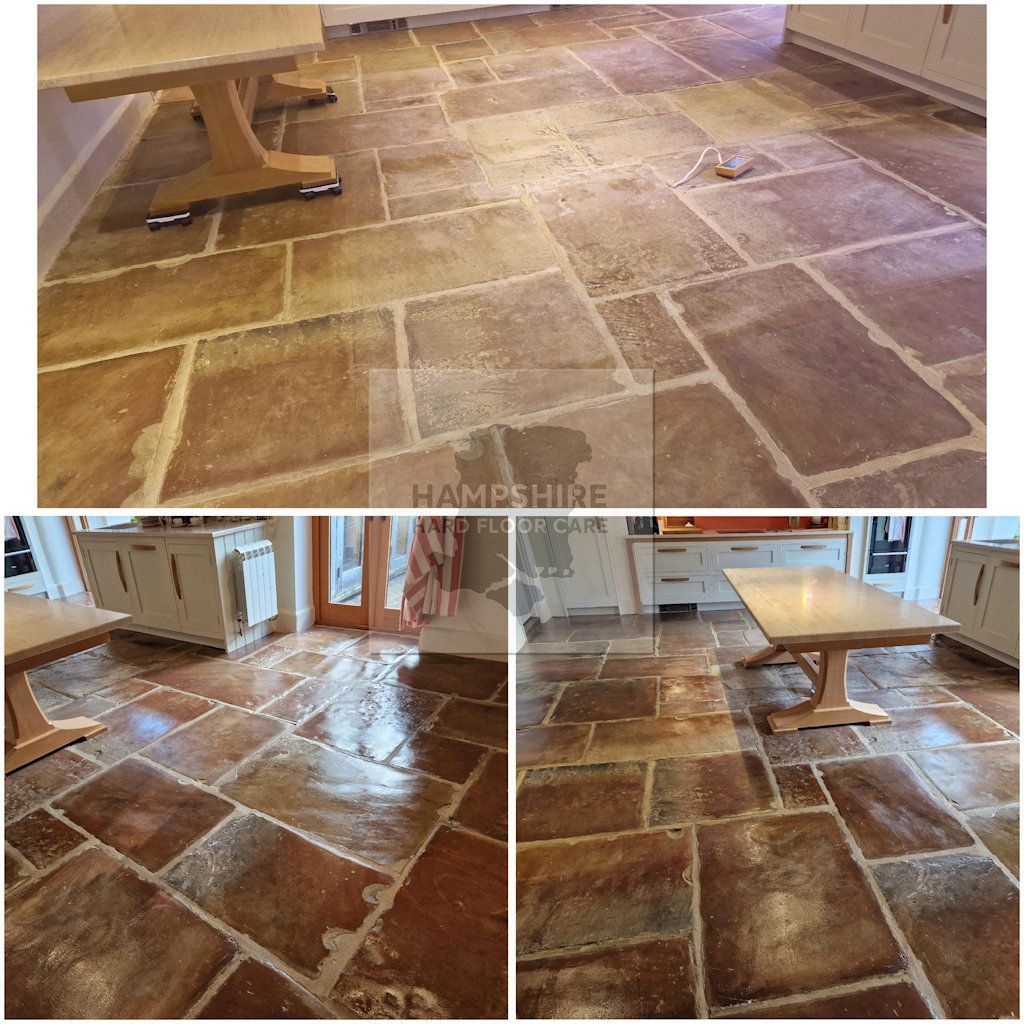
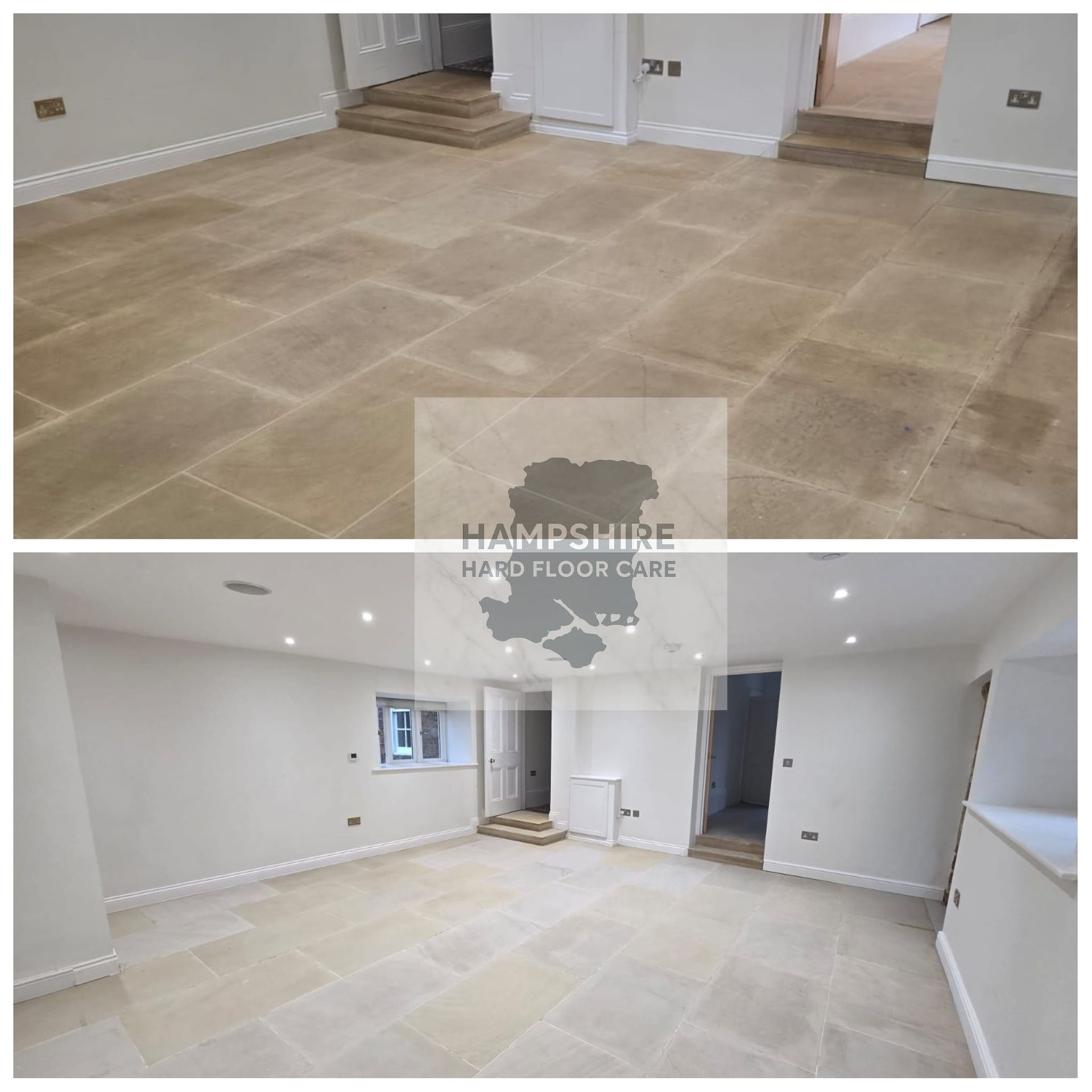
Trusted Experts in Stone Floor Care in Hampshire
At Hampshire Hard Floor Care, we use a safe and proven process to clean and restore your Sandstone and Yorkstone floors — removing years of built-up soil, residues, and dullness while protecting the natural structure and character of the stone.
1. Initial Inspection & Testing
We begin by assessing the type of Sandstone or Yorkstone, its finish (riven, honed, sawn, brushed, tumbled), level of wear, porosity, and any existing sealers or coatings.
A small test area is often carried out to determine the safest and most effective cleaning method for the specific stone.
2. Dry Soil Removal
All areas are vacuumed and dry-mopped to remove loose grit, dust, and debris. These stones can scratch easily if abrasive particles are left on the surface before wet cleaning.
3. Pre-Treatment
A pH-neutral or slightly alkaline stone-safe cleaner (never acidic) is applied and allowed to dwell. This helps break down ingrained dirt, organic contamination, oils, and old maintenance products held within the pores and natural clefts of the stone.
4. Agitation
The cleaning solution is mechanically agitated using rotary or oscillating machines fitted with appropriate brushes or pads for Sandstone and Yorkstone.
This deep-cleans textured surfaces, open grain, and grout lines without damaging the stone or disturbing natural bedding layers.
5. Rinsing & Extraction
Slurry and contaminants are rinsed away using controlled water and vacuum extraction.
We use professional stone-rinsing systems to ensure the floor is left clean, residue-free, and ready for drying.
6. Spot Treatment (If Required)
Stains, dark patches, or stubborn contamination are treated using specialist poultices or targeted restoration products.
Where appropriate, light honing pads may be used to blend worn or uneven areas.
7. Drying
Floors are thoroughly dried using air movers to remove moisture from the stone and grout before sealing.
8. Sealing & Protection
Once dry, a premium penetrating impregnating sealer is applied to protect both the stone
and grout from water, oils, and everyday spills.
We only use trusted professional brands such as
Faber Stone Care, Fila, TileMaster, StoneCare Direct, and LTP, ensuring long-lasting and reliable protection.
9. Final Inspection & Aftercare Advice
The restored floor is inspected under good lighting to ensure an even, high-quality finish.
We provide clear aftercare guidance — including recommended pH-neutral cleaners and simple maintenance routines — to help keep your Sandstone or Yorkstone looking beautifully clean and well cared for.
Why We Avoid Using High-Pressure Systems on Stone Floors
At Hampshire Hard Floor Care, we often get asked why we don’t use high-pressure rotary tools such as the HydraMaster SX-15 for cleaning natural stone floors. While the SX-15 is an excellent system for external hard surfaces and ceramic or porcelain tile, it is not suitable for delicate or polished natural stone.
How the SX-15 Works
The SX-15 works by spraying water at pressures of up to 2,500 psi and recovering it through a vacuum system. This high energy action can quickly remove heavy soil from textured tiles and grout, so whilst this method may be quicker it also introduces several risks when used on natural stone.
Risks to Natural Stone
· Surface Damage – The powerful jets can erode or scratch soft stones like limestone, travertine, and marble, dulling their polished finish or leaving visible swirl marks.
· Grout Blow-Out – Older or porous grout joints can be loosened or completely blown out under pressure.
· Water Ingress – High pressure can drive water deep into the stone or subfloor, leading to efflorescence, dark patches, or long-term moisture problems.
· Uneven Cleaning – The spinning jets can leave circular patterns on polished or honed finishes if moved too fast.
Our Preferred Method
We use low-moisture rotary or planetary machines with controlled cleaning chemistry designed for stone. This method gently loosens soiling while maintaining full control over pressure, temperature, and moisture levels. It ensures:
- No risk of etching or erosion.
- Even, consistent results.
- Faster drying times.
- Complete safety for surrounding finishes and furnishings.
Our approach aligns with the National Carpet Cleaners Association (NCCA) who represent
professional cleaning and restoration technicians
across multiple surfaces including internal stone floors and IICRC recommendations for stone care, as well as manufacturer & supplier guidelines from companies such as
Marshalls and
Building Transformation who advise against using high-pressure systems on interior natural stone.
In summary: High-pressure tools like the SX-15 are superb for commercial situations, but they are too aggressive for interior natural stone restoration. Our specialist stone cleaning systems achieve deep cleaning safely — without risking permanent damage.
Restore Your Stone Floors to Perfection
Don’t settle for dull, stained stone—let Hampshire Hard Floor Care bring back the wow factor to your home or business. Contact Richard and Michelle today for a free consultation.
Call Richard for free quotation
Hampshire Hard Floor Care
Based in Hampshire also serving surrounding areas
Phone
01489600571 / 07773655075