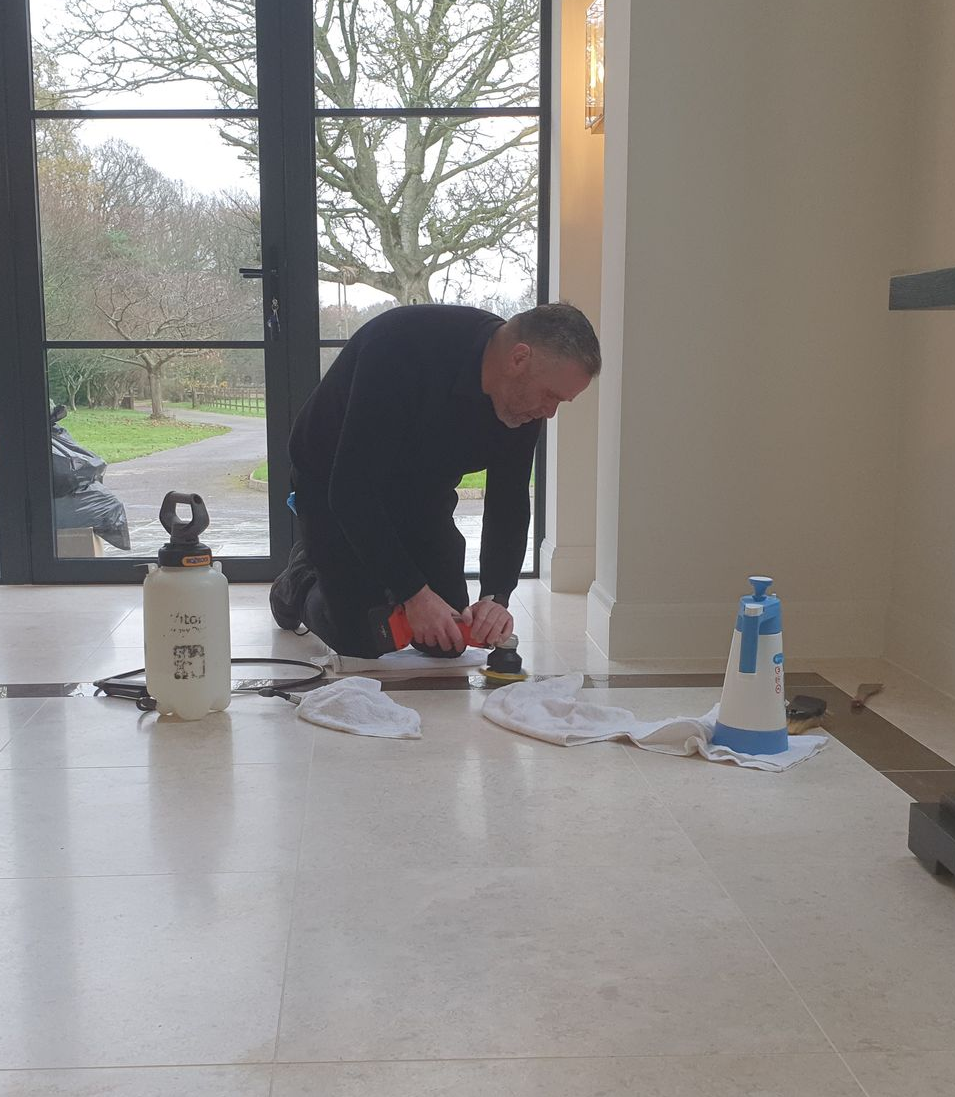
Slate , the ultimate care
This page is dedicated to Slate itself including how we clean & restore, what we do not do.
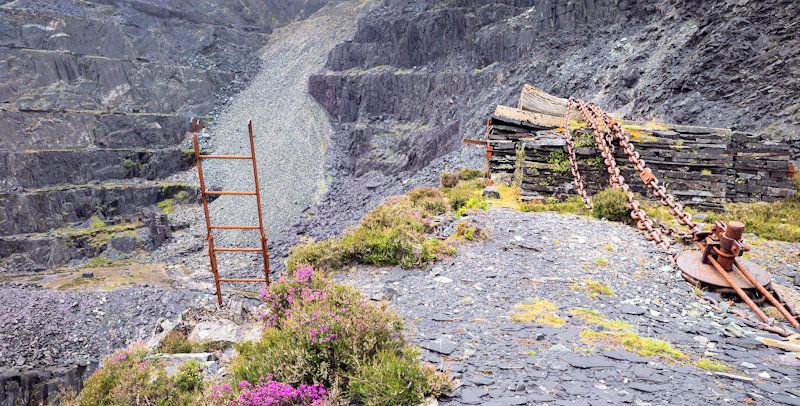
From Earth to Your Home: The Journey of Slate Floors
Slate has earned its place as one of the most characterful and hard-wearing natural stones used in homes today. Its deep tones, layered textures, and rugged beauty have made it a favourite in everything from cosy country kitchens to minimalist modern living spaces. But the story of slate begins long before it becomes the floor beneath your feet — it starts deep within the earth, shaped by geological processes millions of years in the making.
Born in Ancient Landscapes
Slate is not sedimentary like limestone or sandstone. Instead, it is a metamorphic rock, meaning it was transformed by heat and pressure over an immense timescale.
It began life as fine clay, mud, or volcanic ash deposited in ancient seabeds or valleys. As continents shifted and mountain ranges rose, these layers were buried deep underground. Over millions of years, intense pressure compressed them into a dense, fine-grained rock with a distinctive foliation — the internal layering that allows slate to be split so cleanly.
This metamorphic process gives slate its:
- Strength and low porosity
- Naturally slip-resistant texture
- Beautiful variations in grain and colour
- Ability to be split into thin, durable sheets
The slate in your home is quite literally a slice of geological history.
Quarrying the Slate
Slate is typically found in rugged, mountainous regions where ancient rock beds have been pushed close to the surface. Some of the most famous slate quarries are found in Wales, Spain, Portugal, Brazil, and parts of the US.
Extracting the stone requires a combination of traditional craftsmanship and modern engineering:
- Large blocks are cut from exposed rock faces.
- Diamond wire saws, wedges, and controlled splitting methods are used to free the blocks.
- The quarries often reveal dramatic, towering walls of layered slate formed over hundreds of millions of years.
These blocks are then transported to workshops where skilled workers begin the delicate process of turning raw stone into usable tiles.
Splitting and Shaping
One of slate’s unique qualities is its ability to cleave naturally along its grain. Master splitters use hammers and chisels to open the stone with remarkable precision, following the natural lines created during metamorphism.
This splitting process determines:
- The texture of the final surface
- The thickness of the tile
- The visual “character” of each piece
Once split, the slate is cut into standard tile sizes or custom pieces suitable for flooring, wall cladding, window sills, or even hearths.
Surface Finishes
The beauty of slate lies in its versatility. Before it reaches your home, it may be finished in several different ways depending on the desired aesthetic:
• Natural Cleft
A textured, uneven finish created by the natural splitting of the stone. This is the most authentic slate appearance, showcasing ridges, ripples, and natural contours.
• Honed
A smooth, flat, matt finish achieved by lightly grinding the surface. Honed slate offers a more contemporary feel while retaining the natural colour depth.
• Polished
Less common for slate, polishing creates a reflective finish. It can highlight colour variations but requires more maintenance.
Slate colours can range from classic charcoal and graphite greys to rich greens, deep purples, and warm rust tones — all formed by the unique minerals present during its creation.
Transport, Installation & Setting the Stone
Once processed, slate tiles are carefully packed and shipped worldwide. During installation:
- The floor is levelled and prepared
- Suitable adhesives are applied
- Tiles are laid to highlight natural variation
- Grout is added to secure the installation
- Sealers may be applied depending on the slate type and finish
Good installation is crucial, as slate’s natural variation means every tile must be placed with care to create a cohesive, attractive floor.
Care, Maintenance & Restoration
While slate is naturally tough, it still benefits from proper care:
- Sealing helps protect against stains, water absorption, and daily wear.
- Routine cleaning with a pH-neutral stone cleaner keeps the surface free from residues.
- Avoiding harsh chemicals prevents etching or dullness.
Over time, foot traffic, kitchen spills, and general wear can make slate appear dull, patchy, or unevenly sealed. That’s where professional maintenance comes in.
Preserving Slate in Hampshire Homes
At Hampshire Hard Floor Care, we regularly revive slate floors that have become tired or lost their natural vibrancy. Our services include:
- Deep cleaning to remove embedded soils and old residues
- Stripping failed or patchy sealers
- Re-sealing with high-quality impregnating or topical sealers
- Enhancing natural colours and restoring even shading
- Optional grout cleaning and colour restoration
Whether your slate is rough-textured and rustic or smooth and contemporary, professional maintenance brings it back to life and ensures it continues telling its geological story for generations.
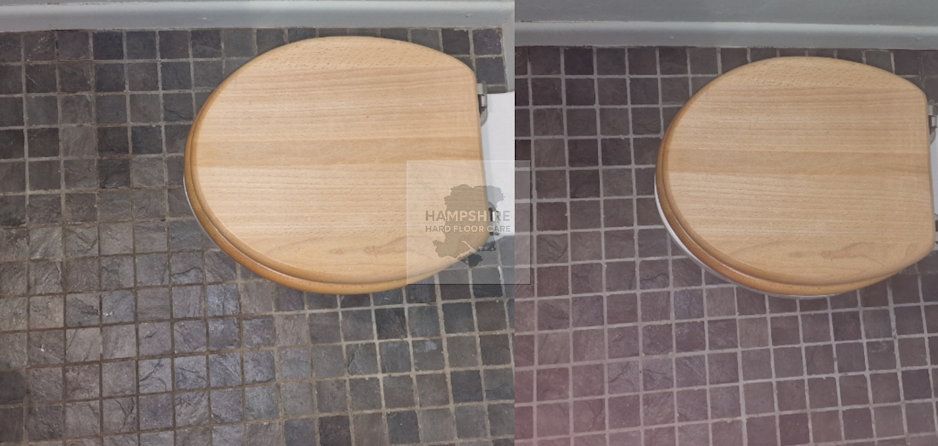
Trusted Experts in Stone Floor Care in Hampshire
Professional Slate Floor Cleaning & Restoration Process
At Hampshire Hard Floor Care, we use a safe, proven, and slate-specific process to deep clean and restore your slate floors — removing years of built-up soil, residues, and uneven finishes while protecting the natural texture and colour of the stone.
1. Initial Inspection & Testing
We begin by inspecting the slate to determine:
- The type of slate (cleft, riven, honed, calibrated, Brazilian, Indian, Welsh, etc.)
- Existing sealers or topical coatings
- Areas of uneven wear, patchiness, or shadowing
- Grout condition and porosity
A small test area is often carried out to identify the safest and most effective cleaning method for that particular slate.
2. Dry Soil Removal
All areas are vacuumed and dry-mopped to remove loose grit, debris, and dust.
This is especially important with
riven or natural cleft slate, where surface texture holds more abrasive particles.
3. Pre-Treatment
A slate-safe alkaline or pH-neutral cleaner is applied and allowed to dwell.
This breaks down:
- Ground-in soil
- Old mopping residues
- Patchy previous sealers
- Food and grease contamination
We avoid acidic products, which can damage grout, affect colour, or cause surface dullness.
4. Mechanical Agitation
The floor is deep-cleaned using machinery appropriate to the slate’s texture:
- Soft–medium brushes for riven or heavily contoured slate
- Diamond-impregnated pads for smoother or honed slate
- Detail brushes for grout lines and edges
This agitation lifts soils from the clefts and texture without scratching or altering the stone.
5. Rinsing & Extraction
The slurry is thoroughly rinsed and extracted using professional stone rinsing systems.
This removes loosened contamination and ensures the surface is left:
- Clean
- Neutralised
- Residue-free
- Ready for drying
6. Stain or Film Removal (If Required)
If stubborn residues remain — such as:
- Old acrylic sealers
- Mopping films
- Heavy soil marks
- Paint spots or builders’ residue
— these are treated with slate-safe stripping agents or mild honing methods.
We work carefully to preserve the natural characteristics of the slate.
7. Drying
Air movers are used to speed up drying.
Slate, especially riven types, can hold moisture in its texture, so achieving complete dryness before sealing is essential for long-lasting results.
8. Sealing & Protection
Once fully dry, we apply the most suitable protective finish for your slate:
Penetrating (Impregnating) Sealer
- Leaves a natural matt appearance
- Protects against spills and stains
- Ideal for clients wanting a natural, understated look
Colour-Enhancing Sealer
- Deepens tones and enriches the slate’s natural colours
- Popular for charcoal, black, green, or multicoloured slate
Topical Seal (Satin or Matt)
- Adds a subtle sheen
- Helps unify appearance on patchy floors
- Provides extra surface protection
We use trusted brands such as Faber Stone Care, Fila, TileMaster, StoneCare Direct, and LTP for professional and long-lasting protection.
9. Final Inspection & Aftercare Advice
Once the slate is restored, we inspect the floor under good lighting to ensure even cleaning and sealing.
You also receive aftercare guidance, including:
- Recommended pH-neutral cleaning products
- How to avoid residue build-up
- Tips for maintaining an even finish
- Long-term maintenance and reseal intervals
With correct care, your slate floor will stay rich, clean, and beautifully protected for many years.
Why We Avoid Using High-Pressure Systems on Stone Floors
At Hampshire Hard Floor Care, we often get asked why we don’t use high-pressure rotary tools such as the HydraMaster SX-15 for cleaning natural stone floors. While the SX-15 is an excellent system for external hard surfaces and ceramic or porcelain tile, it is not suitable for delicate or polished natural stone.
How the SX-15 Works
The SX-15 works by spraying water at pressures of up to 2,500 psi and recovering it through a vacuum system. This high energy action can quickly remove heavy soil from textured tiles and grout, so whilst this method may be quicker it also introduces several risks when used on natural stone.
Risks to Natural Stone
· Surface Damage – The powerful jets can erode or scratch soft stones like limestone, travertine, and marble, dulling their polished finish or leaving visible swirl marks.
· Grout Blow-Out – Older or porous grout joints can be loosened or completely blown out under pressure.
· Water Ingress – High pressure can drive water deep into the stone or subfloor, leading to efflorescence, dark patches, or long-term moisture problems.
· Uneven Cleaning – The spinning jets can leave circular patterns on polished or honed finishes if moved too fast.
Our Preferred Method
We use low-moisture rotary or planetary machines with controlled cleaning chemistry designed for stone. This method gently loosens soiling while maintaining full control over pressure, temperature, and moisture levels. It ensures:
- No risk of etching or erosion.
- Even, consistent results.
- Faster drying times.
- Complete safety for surrounding finishes and furnishings.
Our approach aligns with the National Carpet Cleaners Association (NCCA) who represent professional cleaning and restoration technicians across multiple surfaces including internal stone floors and IICRC recommendations for stone care, as well as manufacturer & supplier guidelines from companies such as Marshalls and Building Transformation who advise against using high-pressure systems on interior natural stone.
In summary: High-pressure tools like the SX-15 are superb for commercial situations, but they are too aggressive for interior natural stone restoration. Our specialist stone cleaning systems achieve deep cleaning safely — without risking permanent damage.
Restore Your Stone Floors to Perfection
Don’t settle for dull, stained stone—let Hampshire Hard Floor Care bring back the wow factor to your home or business. Contact Richard and Michelle today for a free consultation.
Call Richard for free quotation
Hampshire Hard Floor Care
Based in Hampshire also serving surrounding areas
Phone
01489600571 / 07773655075