Limestone, the ultimate care
This page is dedicated to Limestone itself and how we clean & restore, what we do not do.
From Earth to Your Home: The Journey of Limestone Floors
Limestone is one of the most cherished natural stones found in homes across Hampshire. From farmhouse kitchens in the New Forest to elegant entrance halls in Winchester and modern open-plan spaces in Southampton, limestone flooring delivers a unique blend of warmth, durability and timeless sophistication.
But very few people realise the extraordinary journey this stone takes before it becomes the beautiful floor beneath your feet. It’s a story millions of years in the making.
Born in Ancient Seas
The journey of limestone begins long before any quarry existed — long before humans even walked the earth.
Millions of years ago, vast tropical seas covered much of the planet. As marine life thrived, the shells, corals and tiny skeletal fragments of organisms gradually settled on the seabed. Layer upon layer accumulated, compacting over immense periods of time.
Pressure, minerals, and natural chemical processes slowly transformed these layers into solid rock: limestone.
Those little fossils, shells and subtle veins you notice in your floor?
They’re not design features — they’re traces of ancient life, preserved forever in stone.
Quarrying the Stone
Once a high-quality deposit is located, specialist quarry teams begin carefully extracting the rock.
Quarrying limestone is a precise operation, involving:
- Diamond wire saws and large-scale cutting equipment
- Hydraulic splitters
- Strategic drilling
- And occasionally controlled blasting for particularly dense sections
Each block extracted can weigh several tonnes. The aim is to remove the stone with minimal cracking or stress, preserving the natural structure. These giant blocks are then lifted, loaded and transported to dedicated processing facilities.
Cutting and Shaping the Stone
In the factory, the stone’s transformation begins.
Slab Cutting
Huge diamond-tipped saws slice the raw blocks into large slabs, sometimes several metres long. This stage alone is a feat of engineering — the saws must cut cleanly through dense material while maintaining absolute accuracy.
Tile Production
Once in slab form, the limestone is cut into tiles of specific sizes and thicknesses, depending on its intended use. This may include:
- Standard floor tiles
- Large-format hallway pieces
- Flags for period properties
- Bespoke cuts for premium design projects
Each tile is calibrated to ensure consistent thickness, essential for achieving a smooth installation.
Finishing Touches: Defining Character
Limestone’s beauty lies in its versatility. During finishing, the stone is given a texture and appearance that suits its final setting.
Common finishes include:
- Honed – Smooth, matt, elegant and practical for high-traffic homes.
- Polished – Glossy, reflective and dramatic, ideal for luxurious interiors.
- Tumbled – Softened edges and a time-worn feel, perfect for rustic cottages and period homes.
- Brushed – Gently textured with a natural, lived-in character.
- Antiqued – A more dramatic aged look, suited to heritage and restoration projects.
Each finish enhances different aspects of the stone — fossils become more pronounced in polished tiles, while honed finishes show off subtle movement in the grain.
Shipping and Installation
Once finished, the tiles are packed with extreme care — limestone can be fragile during transport. Crates are loaded, shipped and eventually delivered to installers.
During installation, the subfloor must be properly prepared to ensure a long-lasting result. Tiles are then:
- Laid in the chosen pattern
- Grouted for stability and uniformity
- Sealed to protect against spills, oils and daily wear
A good installer understands the nature of limestone: its variation, its movement and how to position tiles to balance the visual flow.
Care and Maintenance: Protecting the Limestone’s Legacy
Limestone is a natural, porous material — full of history but also vulnerable without proper care.
To keep it performing beautifully for decades, the right maintenance is essential.
- Professional sealing prevents stains, moisture penetration and etching.
- Regular cleaning with pH-neutral products protects the stone’s integrity.
- Deep cleaning and honing remove scratches, dullness and ingrained dirt.
- Resealing ensures the floor continues to resist spills and contaminants.
With the right care, limestone floors can outlast generations, becoming part of your home’s story.
Bringing Stone to Life in Hampshire
At Hampshire Hard Floor Care, we see this journey every day. Every limestone floor we restore or maintain is a piece of geological history — a surface that began life in ancient oceans and now sits at the heart of your home.
Our job is to protect that history, enhance its beauty, and ensure your limestone floor remains stunning for years to come.
Trusted Experts in Stone Floor Care in Hampshire
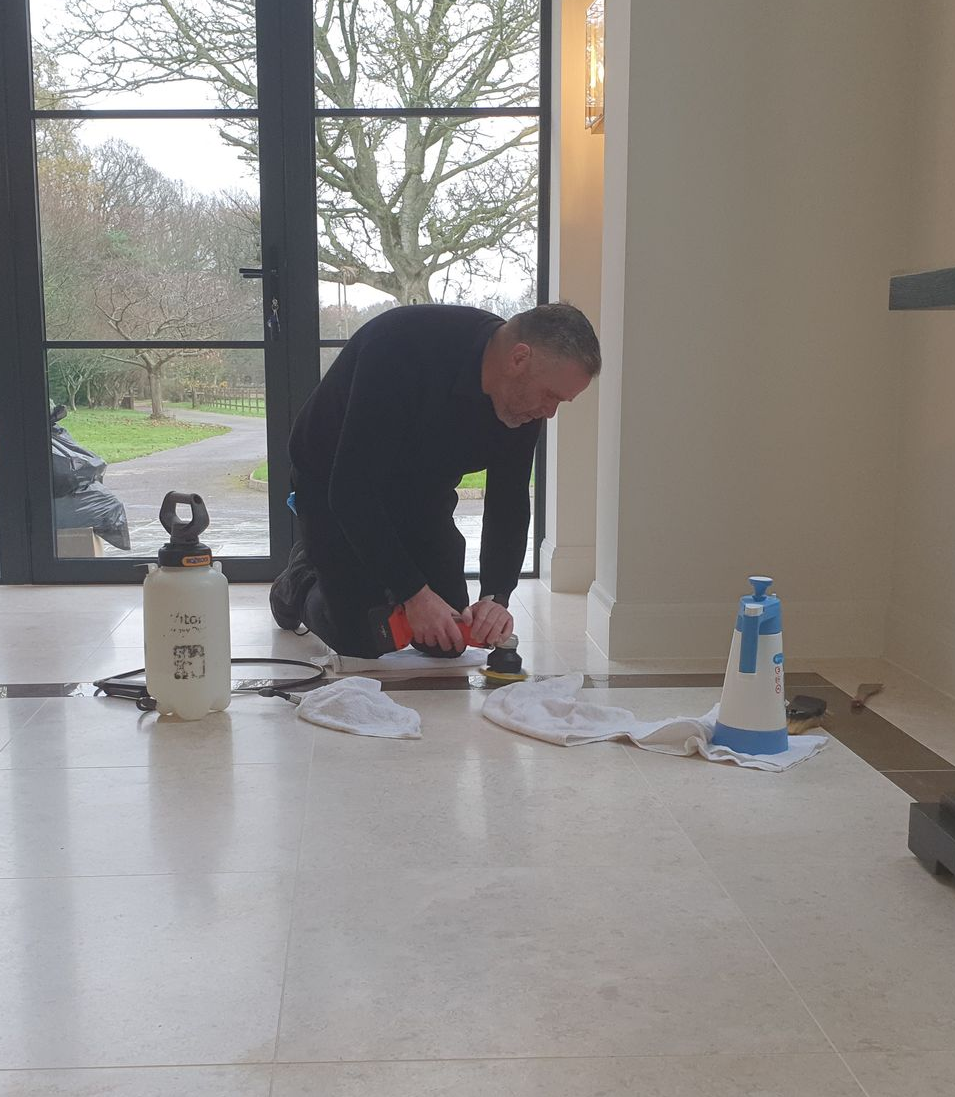
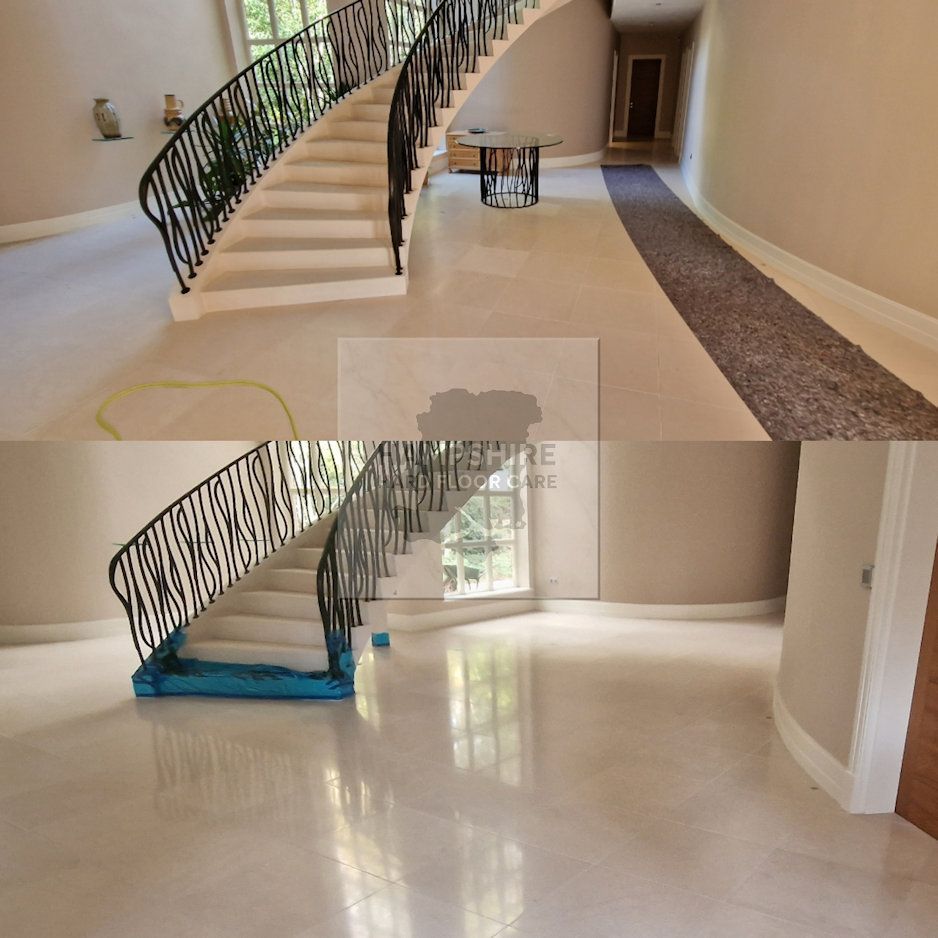
At Hampshire Hard Floor Care, we use a safe and proven process to clean and restore your limestone floors — removing years of built-up soil, residues, and dullness while protecting the natural beauty of the stone.
1. Initial Inspection & Testing
We begin by inspecting the floor to identify the type of limestone, finish, level of wear, and any existing sealers or coatings.
A small test area is often completed to determine the safest and most effective cleaning approach.
2. Dry Soil Removal
All surfaces are vacuumed and dry-mopped to remove loose grit, dust, and debris which can scratch the stone during wet cleaning.
3. Pre-Treatment
A pH-neutral or slightly alkaline limestone-safe cleaner (never acidic) is applied and allowed to dwell, loosening embedded dirt, old cleaning residues, and surface contamination.
4. Agitation
The solution is mechanically agitated using
rotary or oscillating floor machines fitted with soft brushes or diamond-impregnated pads appropriate for limestone.
This deep-cleans pores and grout lines without damaging the surface.
5. Rinsing & Extraction
Contaminants and slurry are rinsed away using controlled water and vacuum extraction.
We use professional stone rinsing systems to ensure the surface is left clean, residue-free, and ready for drying.
6. Spot Treatment (If Required)
Any remaining marks or minor etching are carefully treated using specialist limestone restoration techniques or mild honing pads to blend the area.
7. Drying
Floors are thoroughly dried using air movers to ensure all moisture is removed prior to sealing.
8. Sealing & Protection
Once fully dry, a professional-grade
penetrating sealer or
surface finish (satin or natural matt) is applied to protect the stone from spills, staining, and moisture.
We only use trusted brands such as
Faber Stone Care, Fila,
TileMaster, StoneCare Direct and
LTP, ensuring long-lasting protection.
9. Final Inspection & Advice
The restored surface is inspected under good lighting, and we provide aftercare guidance — including recommended cleaning products and maintenance routines to keep your limestone looking beautiful for years.
Why We Avoid Using High-Pressure Systems on Stone Floors
At Hampshire Hard Floor Care, we often get asked why we don’t use high-pressure rotary tools such as the HydraMaster SX-15 for cleaning natural stone floors. While the SX-15 is an excellent system for external hard surfaces and ceramic or porcelain tile, it is not suitable for delicate or polished natural stone.
How the SX-15 Works
The SX-15 works by spraying water at pressures of up to 2,500 psi and recovering it through a vacuum system. This high energy action can quickly remove heavy soil from textured tiles and grout, so whilst this method may be quicker it also introduces several risks when used on natural stone.
Risks to Natural Stone
· Surface Damage – The powerful jets can erode or scratch soft stones like limestone, travertine, and marble, dulling their polished finish or leaving visible swirl marks.
· Grout Blow-Out – Older or porous grout joints can be loosened or completely blown out under pressure.
· Water Ingress – High pressure can drive water deep into the stone or subfloor, leading to efflorescence, dark patches, or long-term moisture problems.
· Uneven Cleaning – The spinning jets can leave circular patterns on polished or honed finishes if moved too fast.
Our Preferred Method
We use low-moisture rotary or planetary machines with controlled cleaning chemistry designed for stone. This method gently loosens soiling while maintaining full control over pressure, temperature, and moisture levels. It ensures:
- No risk of etching or erosion.
- Even, consistent results.
- Faster drying times.
- Complete safety for surrounding finishes and furnishings.
Our approach aligns with the National Carpet Cleaners Association (NCCA) who represent
professional cleaning and restoration technicians
across multiple surfaces including internal stone floors and IICRC recommendations for stone care, as well as manufacturer & supplier guidelines from companies such as
Marshalls and
Building Transformation who advise against using high-pressure systems on interior natural stone.
In summary: High-pressure tools like the SX-15 are superb for commercial situations, but they are too aggressive for interior natural stone restoration. Our specialist stone cleaning systems achieve deep cleaning safely — without risking permanent damage.
Restore Your Stone Floors to Perfection
Don’t settle for dull, stained stone—let Hampshire Hard Floor Care bring back the wow factor to your home or business. Contact Richard and Michelle today for a free consultation.
Call Richard for free quotation
Hampshire Hard Floor Care
Based in Hampshire also serving surrounding areas
Phone
01489600571 / 07773655075