Porcelain and Ceramic Tiled Floors, the ultimate care
This page is dedicated to Porcelain and Ceramic Tiles themself and how we clean & restore, what we do not do.
From Earth to Your Home: The Journey of Ceramic and Porcelain Tiles
Ceramic and porcelain tiles are among the most popular, durable, and design-flexible flooring materials used in homes today. You’ll find them everywhere — from contemporary bathrooms and high-traffic kitchens to hallways, conservatories, patios, and commercial spaces. But how do these tiles go from raw earth to the beautiful surfaces in your home, and what really sets porcelain apart from ceramic? Let’s take a closer look at their journey.
Starting with Natural Clay
Every ceramic and porcelain tile begins with clay extracted from the earth. This clay is blended with natural materials such as feldspar, sand, and minerals to achieve the right strength, texture, and workability.
The key difference comes down to composition:
- Ceramic tiles use softer, more porous clay.
- Porcelain tiles use a refined, denser clay with more feldspar, giving increased strength and reduced porosity.
This mixture is thoroughly milled, filtered, and prepared into a fine, consistent material ready for shaping.
Shaping the Tiles
The prepared clay mixture is shaped into tiles using industrial moulds or large hydraulic presses.
This process ensures:
- Consistent tile thickness
- Accurate sizing
- Smooth, compacted surfaces ready for glazing or finishing
Porcelain tiles, in particular, are pressed with greater force, which helps create their dense, low-absorbency structure.
Drying and Firing
Once shaped, tiles are dried in controlled chambers to remove natural moisture.
Ceramic tiles are fired at lower temperatures — typically around 1,000°C. This creates a strong tile but leaves some natural porosity.
Porcelain tiles undergo firing at much higher temperatures — often 1,200°C or more — and for a longer duration. This high-temperature vitrification process makes porcelain:
- Far denser
- More impact-resistant
- Less water-absorbent
- Suitable for both indoor and outdoor environments
- An ideal choice for heavy foot traffic areas
This is why porcelain is often preferred for contemporary kitchens, hallways, commercial settings, and patios.
Glazing and Finishing
Before the final firing, many tiles receive a glaze — a liquid glass coating that bonds to the tile during firing. This glaze provides:
- Colour and design
- A protective layer against stains
- A glossy, satin, or matt finish
- Increased resistance to moisture
Unglazed porcelain, however, is also extremely popular. These tiles are coloured throughout the body of the tile, making them incredibly tough and ideal for floors that mimic natural stone.
In recent years, manufacturers have added extra finishes such as:
- Anti-slip textures
- Polished porcelain finishes
- Matt micro-textures for modern interiors
- High-definition printed patterns
Design Possibilities
Modern tile manufacturing offers more design choice than ever.
With digital printing technology, porcelain and ceramic tiles can accurately mimic:
- Marble
- Limestone
- Slate
- Wood
- Concrete
- Fabrics
- Terrazzo
This means homeowners can enjoy the look and elegance of natural materials — with the easy maintenance and durability of tile.
Installation in Homes
Once produced, tiles are inspected, graded, packaged, and shipped to retailers and installers.
Tile installation involves:
- Preparing and levelling the subfloor
- Laying tiles with specialist adhesives
- Creating clean lines with spacers
- Grouting joints for strength and hygiene
- Cleaning and, if applicable, sealing (especially for unglazed porcelain or textured tiles)
A well-installed porcelain or ceramic floor can last decades with proper care.
Care and Maintenance
One of the biggest advantages of porcelain and ceramic tiles is how easy they are to maintain.
Routine care includes:
- Regular sweeping or vacuuming
- Damp mopping with pH-neutral cleaners
- Avoiding bleach, acidic products, or abrasive pads that can damage grout
Over time, grout lines and textured surfaces can trap dirt. Professional deep cleaning is often needed to:
- Remove ingrained soil
- Clear grout haze
- Restore clarity on polished porcelain
- Refresh grout lines
- Remove residues that household cleaners can’t shift
With proper maintenance, ceramic and porcelain tile floors stay fresh, hygienic, and beautifully vibrant for many years.
Trusted Experts in Stone Floor Care in Hampshire
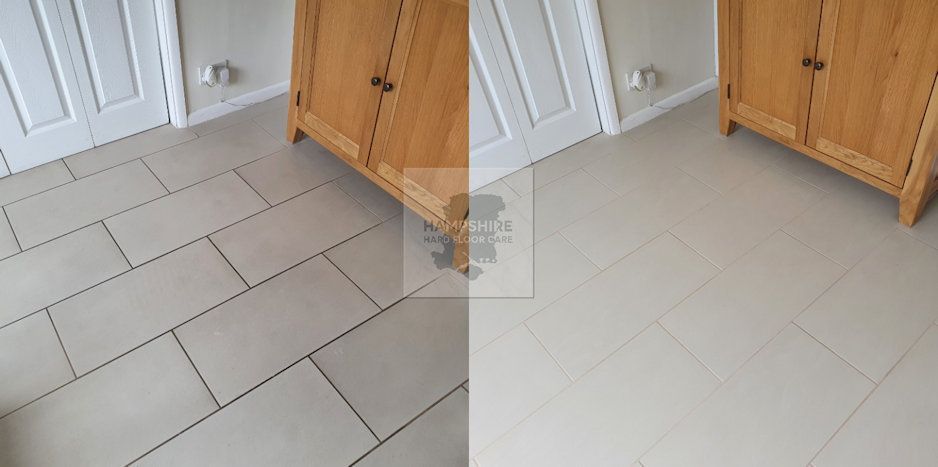
At Hampshire Hard Floor Care, we use a safe and proven process to deep-clean and restore your porcelain and ceramic tiles — removing years of ingrained soil, residues, grout haze, and dullness while preserving the original factory finish.
1. Initial Inspection & Testing
We begin by assessing the type of tile (matt, polished, textured, glazed), identifying surface residues, grout condition, and any previous sealers or coatings.
A small test area is often carried out to confirm the safest and most effective cleaning method.
2. Dry Soil Removal
All surfaces are vacuumed and dry-mopped to remove grit, dust, and loose debris.
This prevents scratching and prepares the floor for effective wet cleaning.
3. Pre-Treatment
Specialist porcelain- and ceramic-safe cleaning solutions are applied to break down oils, dirt, grout haze, limescale, and cleaning-product build-up.
These solutions are tile-safe and do not damage glazes, finishes, or grout.
4. Agitation
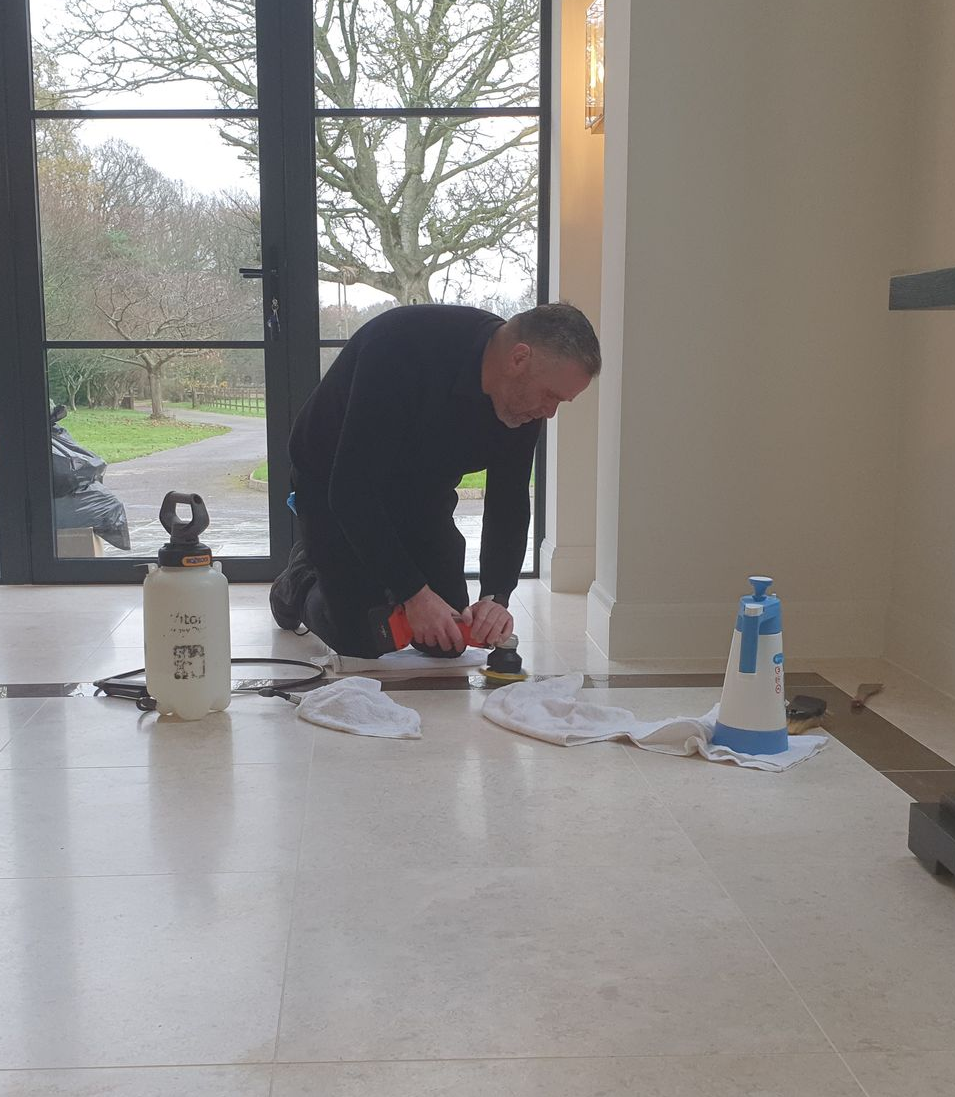
The floor is mechanically agitated using rotary or oscillating machines with the correct pads or brushes for the tile type.
This deep-cleans textured surfaces and grout lines, lifting out contamination that mopping cannot reach.
5. Rinsing & Extraction
Contaminants and slurry are thoroughly rinsed and extracted using controlled water and wet-vacuum systems.
This ensures the tiles are left residue-free, streak-free, and ready to dry.
6. Spot Treatment (If Required)
Stubborn marks, mineral deposits, or bonded residues are treated with targeted porcelain-safe agents or fine micro-abrasive pads.
For polished porcelain, micro-polishing may be used to refine light scratches or dull areas.
7. Drying
Professional air movers may be used to speed up drying and ensure the tiles and grout are fully ready for any protective treatments.
8. Protective Treatment (Optional)
While porcelain and ceramic tiles aren’t porous like natural stone, optional treatments can still provide valuable benefits.
We offer:
- Grout protection to prevent staining
- Porcelain-safe sealants for textured or matt tiles
- Anti-slip treatments where extra grip is needed
We only use trusted brands such as Faber, Fila, TileMaster, StoneCare Direct, and LTP for long-lasting performance.
9. Final Inspection & Advice
Once the floor is restored, we carry out a final inspection and provide tailored aftercare advice — including suitable cleaning products and maintenance tips to keep your tiles looking fresh, clean, and easy to maintain all year round.
Why We Avoid Using High-Pressure Systems on Stone Floors
At Hampshire Hard Floor Care, we often get asked why we don’t use high-pressure rotary tools such as the HydraMaster SX-15 for cleaning natural stone floors. While the SX-15 is an excellent system for external hard surfaces and ceramic or porcelain tile, it is not suitable for delicate or polished natural stone.
How the SX-15 Works
The SX-15 works by spraying water at pressures of up to 2,500 psi and recovering it through a vacuum system. This high energy action can quickly remove heavy soil from textured tiles and grout, so whilst this method may be quicker it also introduces several risks when used on natural stone.
Risks to Natural Stone
· Surface Damage – The powerful jets can erode or scratch soft stones like limestone, travertine, and marble, dulling their polished finish or leaving visible swirl marks.
· Grout Blow-Out – Older or porous grout joints can be loosened or completely blown out under pressure.
· Water Ingress – High pressure can drive water deep into the stone or subfloor, leading to efflorescence, dark patches, or long-term moisture problems.
· Uneven Cleaning – The spinning jets can leave circular patterns on polished or honed finishes if moved too fast.
Our Preferred Method
We use low-moisture rotary or planetary machines with controlled cleaning chemistry designed for stone. This method gently loosens soiling while maintaining full control over pressure, temperature, and moisture levels. It ensures:
- No risk of etching or erosion.
- Even, consistent results.
- Faster drying times.
- Complete safety for surrounding finishes and furnishings.
Our approach aligns with the National Carpet Cleaners Association (NCCA) who represent professional cleaning and restoration technicians across multiple surfaces including internal stone floors and IICRC recommendations for stone care, as well as manufacturer & supplier guidelines from companies such as Marshalls and Building Transformation who advise against using high-pressure systems on interior natural stone.
In summary: High-pressure tools like the SX-15 are superb for commercial situations, but they are too aggressive for interior natural stone restoration. Our specialist stone cleaning systems achieve deep cleaning safely — without risking permanent damage.
Restore Your Stone Floors to Perfection
Don’t settle for dull, stained stone—let Hampshire Hard Floor Care bring back the wow factor to your home or business. Contact Richard and Michelle today for a free consultation.
Call Richard for free quotation
Hampshire Hard Floor Care
Based in Hampshire also serving surrounding areas
Phone
01489600571 / 07773655075