
Historic Stone & Tile – Working to UK Conservation Principles
Hampshire Hard Floor Care
Our Services Across Hampshire
We provide specialist stone, tile and hard-surface restoration throughout Hampshire, delivering a professional, conservation-minded approach tailored to the county’s diverse mix of homes, heritage buildings and commercial properties. Whether you’re in Southampton, Winchester, Portsmouth, Fareham, Eastleigh, Petersfield, Lymington, Basingstoke, Andover, the New Forest or surrounding villages, we bring expert knowledge, advanced equipment and a respectful, careful methodology to every project.
Historic stone and tile surfaces form part of a building’s architectural significance. Whether the property is listed, located within a conservation area, or simply of heritage value, treatments must follow UK conservation best practice to safeguard age, character and authenticity.
Our approach aligns with:
- Historic England conservation principles
- BS 7913:2013 – Guide to the Conservation of Historic Buildings
- Heritage Lottery Fund (HLF) conservation methodology
- Institute of Conservation (ICON) guidelines
Traditional building philosophy: minimal intervention, reversibility where possible, and respect for original fabric
This ensures that any cleaning, repair or surface treatment is appropriate, sensitive and fully defensible in heritage terms.
Key UK Conservation Principles We Follow
1. Retention of historic fabric
Original materials should be kept wherever possible. Replacement is only considered when a component has failed beyond repair.
2. Minimal intervention
We take the least intrusive approach, preserving patina, wear patterns, and the natural surface history that contribute to significance.
3. Reversibility (where achievable)
Treatments should be reversible or at least not prevent future conservation work. Heavy coatings, aggressive grinding or modern materials that cannot be undone are avoided.
4. Use of appropriate, compatible materials
Mortars, fillers, adhesives and cleaning agents must be chemically and physically compatible with traditional stone and tile.
5. Gentle cleaning only
UK conservation guidance prohibits abrasive cleaning, harsh acid-alkali chemicals or any process that removes historic fabric unnecessarily.
6. Preservation of character & appearance
Finishes are kept authentic — often a honed, soft sheen rather than modern glossy, resin-coated looks.
7. Significance-led decision making
Before work begins, we assess the stone’s historical importance, age, previous treatments, defects and environmental factors.
These principles ensure that the work respects the building’s heritage while still meeting modern usability and safety needs.
Identifying Historic Stone & Tile
Historic floors in the UK vary enormously depending on region and era. Typical examples include:
Purbeck, Portland and Bath Stone
York Stone flags
Welsh slate
Victorian geometric encaustic tiles
Terrazzo and composite floors from the 19th/20th century
Our identification process includes on-site tests, visual analysis and—when required—consultation with stone conservators or petrographic laboratories. Correct identification is essential to ensuring compatible repair materials and appropriate treatments.
Honing & Polishing Historic Floors
Historic England and BS 7913 stress the importance of retaining surface history. Therefore:
Full grinding or flattening is generally avoided
Gentle honing may be used to reduce scratches, soiling or uneven wear
Fine abrasives and polishing powders are preferred over aggressive diamond grinding
The goal is a natural-looking, period-appropriate finish
No modern plastic-looking gloss coatings, which are considered intrusive and non-reversible
This ensures the floor looks clean and cared-for, without losing its authenticity.
Cleaning & Maintenance for Historic Floors
We provide maintenance guidance consistent with Historic England’s cleaning and care principles:
Use pH-neutral, stone-safe cleaners
Avoid vinegar, bleach, acidic or strong alkaline cleaning agents
Use minimal water to prevent saturation of old lime-based beds or moisture-sensitive substrates
Regular gentle sweeping to reduce abrasion
Monitor moisture levels and deal with damp issues sensitively
Retain patina — the goal is preservation, not making the stone look "new"
We can also train caretakers, wardens, estate managers and custodians in appropriate methods.
Repairs & Stain Treatment
Repairs follow BS 7913 recommendations:
Repair rather than replace
Use lime-based materials where historically appropriate
Ensure infills and patches are visually sympathetic
Avoid modern cementitious materials that may be too hard or impermeable
Use poultices and gentle stain removal techniques tested in small, inconspicuous areas first
Everything is done slowly, carefully and with respect for the building.
Working With UK Heritage Bodies
We frequently collaborate with:
Historic England
Local Authority Conservation Officers
Church of England DACs
National Trust property teams
Heritage architects & surveyors
We can produce treatment proposals, sample areas, risk assessments and documentation suitable for conservation approval.
Our Historic Stone & Tile Services
We provide:
Historic stone cleaning
Gentle honing & polishing
Mortar repairs, infills & tile/stones re-bedding
Conservation-led stain removal
Heritage maintenance plans
Trial/test areas for approval
Work aligned with BS 7913 and Historic England principles
Whether the property is a Grade I listed church, Grade II townhouse, National Trust home, museum, estate house or heritage commercial space, we can help preserve its floors for the future.
Types of Buildings We Work In
We provide conservation-led stone and tile restoration across a wide range of historic, heritage and period properties throughout Hampshire and the surrounding counties. Our methods follow UK-recognised conservation principles, ensuring every treatment is appropriate, sympathetic and fully reversible where possible.
✔ Listed Buildings (Grade I, Grade II*, Grade II)
We regularly work on privately owned listed homes, public buildings and heritage estates, providing sensitive cleaning, repairs and maintenance that align with Historic England and local conservation officer requirements.
✔ Churches, Cathedrals & Religious Buildings
From medieval stone flags to Victorian encaustic tiles, we carry out careful cleaning, gentle honing, stain removal and repairs in active churches, chapels and other places of worship.
We can also work in collaboration with DACs and church architects.
✔ Historic Country Homes & Estates
Large period homes often contain a mix of stone types—marble, limestone, slate, Yorkstone and terracotta. We provide conservation-grade restoration while respecting patina, wear patterns and historical character.
✔ Museums, Galleries & Public Buildings
High-traffic historic floors require a blend of durability and sensitivity. We help museums, halls, libraries and other public spaces balance visitor use with long-term protection of original stone.
✔ National Trust & Heritage Properties
We’re experienced in working with traditional building materials, natural lime-based substrates and historically appropriate cleaning and repair techniques suited to major heritage institutions.
✔ Historic Hotels, Inns & Hospitality Venues
Properties such as coaching inns, manor-house hotels and boutique heritage venues often have stone features that need careful, minimally invasive maintenance to stay safe, clean and visually authentic.
✔ Period Townhouses & Victorian / Georgian Homes
Many period homes contain original marble, limestone, encaustic, geometric or quarry tile floors. We provide sensitive restoration without modernising or over-polishing the surface.
✔ Heritage Commercial Buildings
Government buildings, civic buildings, banks, courts and traditional commercial premises often contain stone floors that require conservation-appropriate cleaning and periodic treatment.
✔ Barn Conversions & Rural Heritage Properties
Converted barns, farmhouses and rural buildings frequently retain original flagstones, quarry tiles or lime-set stone. We clean and restore these surfaces while preserving their charm and history.
✔ Schools, Colleges & Universities (Historic Campus Buildings)
Where stone or tile flooring forms part of a historic school estate, we provide safe, durable, conservation-led cleaning and repair suitable for heavy footfall.
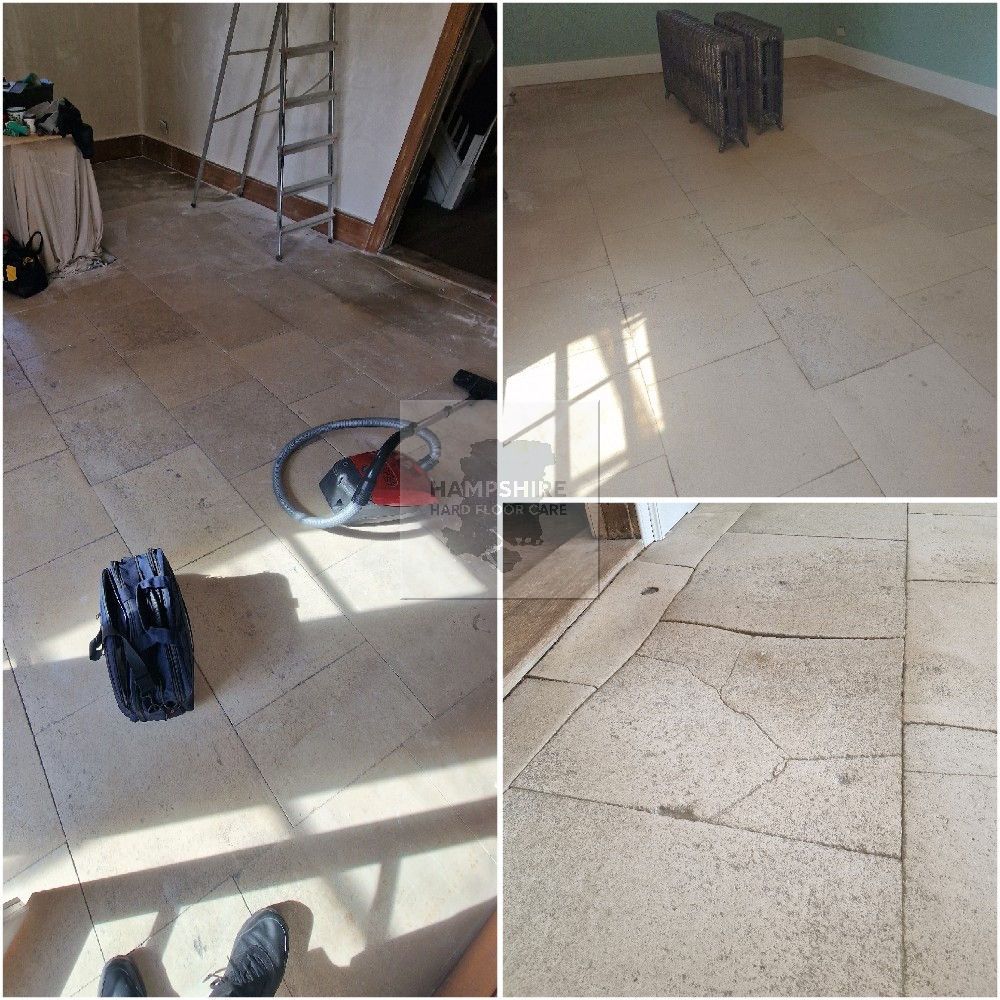
This is a late 19th century limestone floor within in a property in Titchfield, the floor was deep cleaned, missing grout lines were filled to a lower level keeping in with the original character of the floor
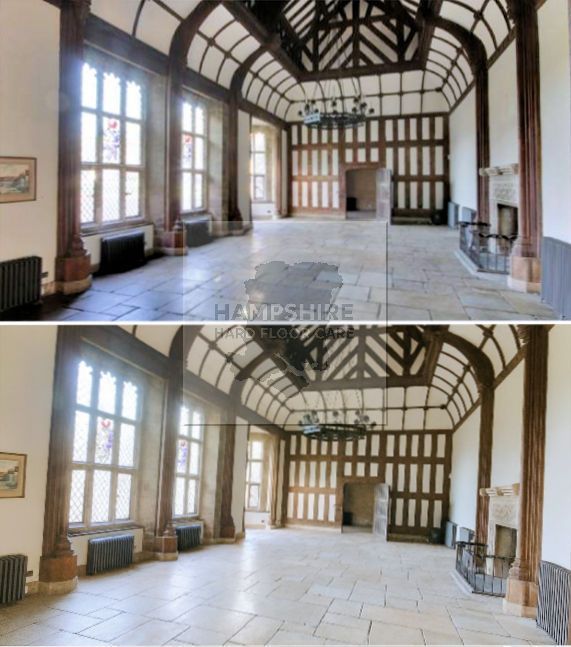
Granite worktop sealed for protection with vapour-permeable impregnating sealer which allows the stone to breathe.
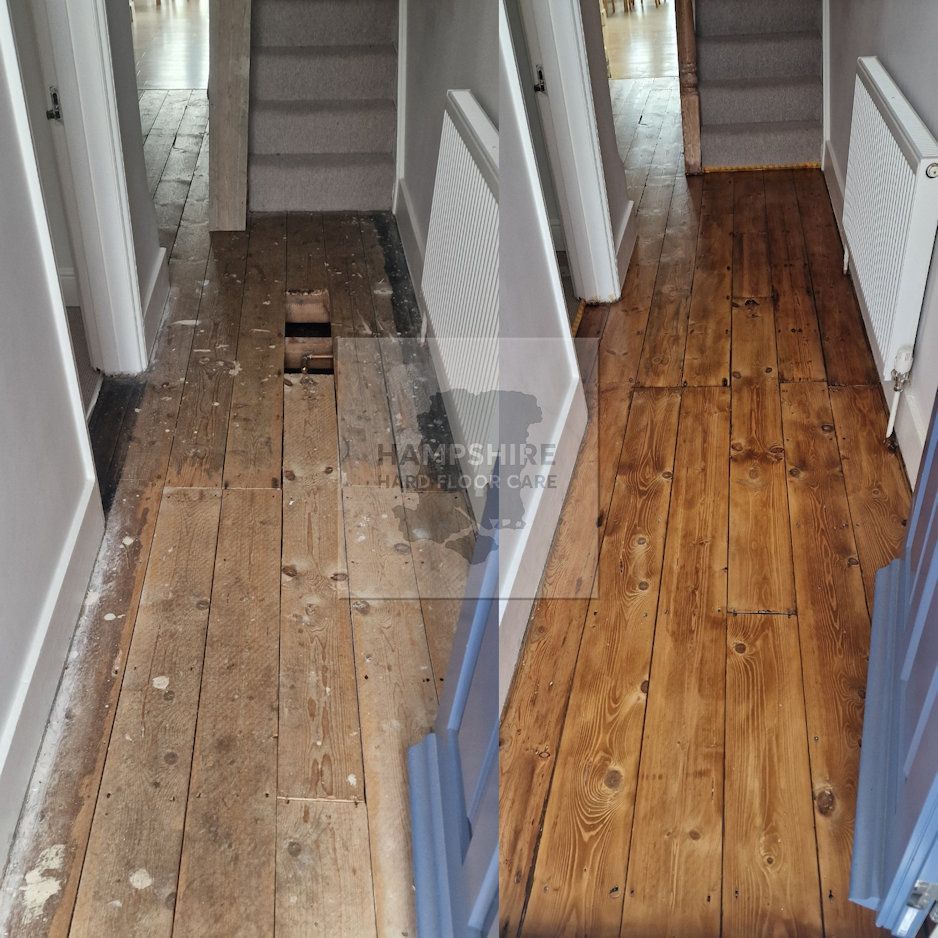
Original 1930's floorboards were restored, damaged ones replaced using supplies from Romsey Reclamation Ltd.